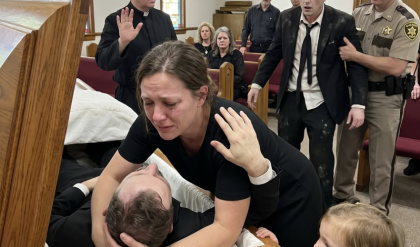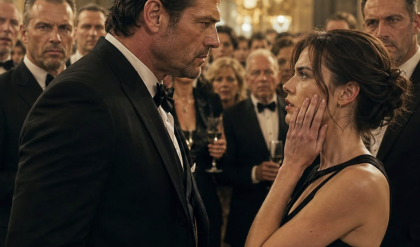
My Son Invited Everyone to His Wedding Except Me.
Then His Bride Called Me for Rent.
My Son Invited Everyone to His Wedding Except Me.
Then His Bride Called Me for Rent.
The day my son erased me from his wedding photos, he forgot one thing: I still owned the roof over his head.
My son got married behind my back, and I found out while his new wife was sitting on the sofa I had paid for.
Not a borrowed sofa.
Not something they found at a thrift store.
My sofa.
Bought with my retirement money.
Delivered to their apartment the same week Lena cried into the phone and told me their old one smelled like mold.
I remember standing in my living room that afternoon with my phone open to the calendar app, my thumb hovering over a blank Saturday in June.
I had been waiting for Max to tell me the wedding date.
I had even practiced acting surprised, though I had already guessed he would choose summer because Lena liked garden photos.
Instead, Lena crossed her slim legs, leaned back against the cream cushions, and smiled.
“Oh, Renate,” she said lightly, as if she were commenting on the weather, “we got married yesterday.”
The world did not explode.
The ceiling did not crack.
My heart did not stop, though for one terrible second, I wished it would.
I only stared at her.
Max stood by the window, hands buried in his pockets, looking down at the floorboards Robert had sanded himself when our son was nine years old.
Max had his father’s dark eyes, his father’s strong jaw, his father’s way of becoming silent when shame entered the room.
But Robert would have looked at me.
Max did not.
“Married?” I whispered.
Lena’s smile widened.
Not kindly.
Not apologetically.
Triumphantly.
“Yes,” she said.
“It was very intimate.
Just a few special people.”
Special people.
Those words walked across my chest wearing knives for shoes.
I looked around my own living room because looking at my son felt too much like touching a hot stove.
Afternoon sunlight lay across the beige walls.
On the mantel, Robert’s framed photograph caught the light.
He had been dead for seven years, but in that photo, he was still smiling as if nothing in the world could ever go wrong with our little family.
On the kitchen counter sat a lemon pound cake under glass.
I had baked it that morning because it had been Max’s favorite as a boy.
“Mom,” Max finally said, his voice tired, rehearsed, almost bored, “it was just a small thing.
Just us and witnesses.”
A small thing.
His wedding.
His mother’s absence.
My humiliation.
All of it folded into those three careless words.
I wanted to ask him if he remembered the nights I sat beside his bed when fever soaked his hair.
I wanted to ask if he remembered who paid his university fees after Robert’s insurance barely covered the funeral.
I wanted to ask if he remembered the winter I wore the same coat with a broken zipper because he needed rent money.
But my voice stayed trapped behind my ribs.
Lena reached for her handbag.
“We didn’t want drama,” she said.
Drama.
That was what I was now.
Not mother.
Not family.
Not the woman who had carried Max inside her body and raised him through grief, illness, debt, and stubborn dreams.
Drama.
I nodded once.
It was the kind of nod women learn after decades of swallowing hurt politely so other people do not feel uncomfortable.
“Well,” I said, “congratulations.”
Max flinched.
Lena did not.
They left ten minutes later.
Max kissed my cheek on his way out, a quick dry touch that felt more like closing a door than saying goodbye.
That evening, my sister Diana called from Chicago.
“Renate,” she said carefully, “have you seen Lena’s sister’s post?”
My stomach knew before my eyes did.
I opened Facebook with shaking fingers.
There they were.
Max in a navy suit, laughing beneath strings of white garden lighTS. Lena in a fitted white dress, holding pale roses.
Her parents stood proudly beside them.
Her siblings raised champagne glasses.
There was a photographer, a cake, flowers, candles, guesTS.
Not hundreds.
But enough.
Enough special people.
One picture showed Lena’s father clapping Max on the shoulder like a proud patriarch.
That man had never paid one dollar of my son’s rent.
Lena’s mother held the bouquet in another photo.
Her sister kissed her cheek.
Everyone looked joyful, glowing, chosen.
I zoomed in until Max’s face filled my screen.
He looked happy.
That was the part that broke me.
Not that he had married without me.
Not that he had lied.
But that my absence had not ruined the day at all.
In my bedroom closet hung the pale pink dress I had bought for the wedding I had imagined.
The tag still tucked inside the sleeve.
Beside it were silver shoes I knew would hurt my feet, but I had bought them anyway because mothers are foolish when they are happy.
In my dresser drawer was a white envelope with one thousand dollars inside, saved slowly over monThS.
On the front, in my careful handwriting, I had written: For your beginning.
That night, I crossed out the words.
Then I sat on the edge of my bed and cried without making a sound.
For one week, I said nothing.
I did not call Max.
I did not message Lena.
I did not leave angry comments beneath the photos, though Diana offered to do it for me and had already written three versions.
I watered my planTS. I folded towels.
I made coffee I barely drank.
I watched the lemon pound cake grow hard beneath its glass dome until finally, on the sixth day, I threw it away.
On the seventh day, Lena called.
Her voice was different.
Gone was the velvet sharpness.
Gone was the little queen sitting on my sofa.
Now she sounded panicked.
“Renate,” she said quickly, “the rent is overdue.”
I sat at my kitchen table and looked out at the maple tree Robert had planted when Max was born.
“The landlord is pressuring us,” Lena continued.
“He said if we don’t pay this week, he’ll start eviction proceedings.
You forgot to transfer it.”
You forgot.
Not “Can you help us?”
Not “We hurt you.”
Not “I’m sorry.”
Just: you forgot.
I closed my eyes.
For three years, I had paid five hundred dollars every month directly to their landlord.
I bought their mattress, microwave, curtains, dishes, and groceries when they “forgot to budget.” I paid medical bills, car repairs, and emergencies that appeared whenever I had saved anything for myself.
The month before the wedding, I had given Lena eight hundred dollars for “personal expenses.”
Looking at the photos now, I suspected my money had helped buy the white dress I had not been invited to see.
“Renate?” Lena snapped.
I opened my eyes.
“Didn’t you warn me?” I asked softly.
“What?”
“You told me only special people were at the wedding.”
Silence.
Then a small laugh, brittle as thin ice.
“This is different.”
“No,” I said.
“It is exactly the same.”
Her breathing changed.
I looked at Robert’s photo across the room.
For the first time in seven years, I felt as if he were not just watching me.
I felt as if he were waiting.
“So tell me, Lena,” I said, my voice calm enough to frighten even myself, “why would you expect money from someone who was not special enough to be family?”
She hung up.
Ten minutes later, Max called.
I let it ring.
Then he called again.
And again.
By evening, there were twelve missed calls and one message.
Mom, please don’t be like this.
I stared at the words for a long time.
Then I typed back:
Be like what, Max?
He answered instantly.
Cruel.
I laughed then.
Not because it was funny.
Because the word was so backward it nearly became comedy.
Cruel was a mother saving money from grocery coupons to pay a grown man’s rent.
Cruel was being excluded from a wedding funded by the same old woman who had been told she was not special.
Cruel was a son calling betrayal a small thing.
But I did not write that.
I wrote only:
The rent is your responsibility now.
You are married.
Three dots appeared.
Disappeared.
Appeared again.
Finally, he replied:
You know we can’t handle this right now.
For years, that sentence would have opened my wallet like a key.
This time, it opened something else.
Memory.
Robert’s voice.
Not from the photograph.
Not from heaven.
From the last week of his life, when cancer had thinned him to bones and light.
He had held my wrist with surprising strength and whispered, “Renate, love him.
But don’t let him feed on you.”
At the time, I thought he meant grief.
I did not understand he meant our son.
The next morning, I went to the bank.
The manager, Mr. Keller, recognized me immediately.
People always did in our town.
Robert had owned a small repair business for thirty-two years, and I had handled the books, the taxes, the angry customers, and the Christmas cookies.
“Mrs. Hoffmann,” he said, “what can I do for you?”
“I need to stop all recurring transfers to my son’s landlord.”
He adjusted his glasses.
“All of them?”
“Yes.”
His eyes moved gently over my face.
He had probably seen enough family stories end at bank desks to understand without asking.
“And,” I added, sliding a folder across the desk, “I need to review the house documenTS.”
That made him pause.
“The apartment building documents?”
“Yes.”
Because here was the secret Max and Lena had never bothered to learn.
The apartment they lived in was not owned by some faceless landlord.
It belonged to Robert’s old business partner, Mr. Albrecht.
Or at least, it used to.
Five months before his death, Mr. Albrecht had sold the building quietly.
He had no children.
Robert and I had once helped him through bankruptcy.
He remembered kindness.
So when he offered me the property below market value, I used Robert’s life insurance settlement and bought it through a small holding company.
For three years, Max had been telling people I was paying his rent.
But the truth was sharper.
I was not paying rent.
I was covering the unit fee on a property I owned.
I had kept it secret because I wanted Max to feel independent.
I wanted him to build pride.
I wanted, foolishly, to protect his dignity.
And in return, he had protected Lena’s wedding from me.
Mr. Keller opened the file, reviewed the paperwork, and nodded slowly.
“You still want the lease enforced?”
I looked down at my hands.
They were old hands now.
Thin skin.
Blue veins.
A wedding ring loose enough to spin.
“Yes,” I said.
“Exactly as written.”
That afternoon, I wrote Max one letter.
Not an email.
Not a text.
A real letter.
Dear Max,
For thirty-eight years, I have been your mother.
For the last three, I have also been your safety net, your bank, your excuse, and your silence.
That ends today.
You and Lena have thirty days to pay all overdue housing costs or vacate the apartment.
Please understand this is not revenge.
This is adulthood.
Your mother,
Renate
I mailed it certified.
Then I did something I had not done in seven years.

I took Robert’s photograph off the mantel, dusted the frame, and said, “I finally heard you.”
Two days later, Max appeared at my door.
He looked terrible.
Unshaven.
Pale.
Eyes red.
For one dangerous second, I saw my little boy again and almost opened my arms.
Then Lena stepped out from behind him, wearing sunglasses though the sky was gray.
“Renate,” she said, her voice tight, “this has gone far enough.”
I did not invite them in.
Max held up the letter.
“Mom, eviction? Seriously?”
“The lease allows thirty days.”
“You’re ruining us.”
“No,” I said.
“I stopped rescuing you.”
Lena yanked off her sunglasses.
“After everything we’ve been through, you would throw your own son onto the street?”
“After everything I paid for, you threw his mother out of his wedding.”
Max looked at the porch floor.
Lena did not.
“We had reasons,” she said.
I felt my chest harden.
“Say them.”
Her lips parted.
Max whispered, “Lena, don’t.”
That made me look at him.
“What don’t you want her to say?”
Lena’s face changed.
Not guilty.
Afraid.
For the first time since I had known her, she looked less like a woman holding cards and more like one realizing the table was on fire.
“It wasn’t personal,” she said.
I waited.
She swallowed.
“My parents didn’t want you there.”
The words landed flat.
“Why?”
Max’s eyes filled with something I could not read.
Lena turned on him.
“Tell her.”
He shook his head.
“Tell me what?” I asked.
Silence stretched across the porch.
Then Max said, so quietly I almost missed it, “Lena’s father offered us money.”
I stared at him.
“What money?”
“To move.
To start over.
He said he would invest in a business for me.”
“A business?”
Max nodded.
My son, who had never finished one online course.
My son, who could not manage a grocery budget without my help.
“How much?”
“Fifty thousand.”
I looked at Lena.
She lifted her chin.
“He said the gift depended on the wedding looking… appropriate.”
“Appropriate?”
Her mouth twisted.
“He didn’t want old family complications.
He said Max needed to choose his future.”
The air left my lungs slowly.
Old family complications.
That was me.
But something did not fit.
Lena’s father had never struck me as generous.
Loud, yes.
Proud, yes.
But not generous.
Certainly not generous enough to give fifty thousand dollars to Max.
“Show me the transfer,” I said.
Max blinked.
“What?”
“The money.
Show me.”
He hesitated.
Lena snapped, “That’s private.”
I looked at my son.
“Max.”
He pulled out his phone with shaking hands.
Opened his banking app.
Scrolled.
There it was.
A deposit.
Fifty thousand dollars.
From a company name I knew.
Not Lena’s father’s company.
Mine.
Hoffmann Holdings.
For a moment, the whole porch tilted.
I took the phone from Max’s hand and stared at the screen.
Hoffmann Holdings had transferred fifty thousand dollars to my son three weeks before the wedding.
Only I had not authorized it.
My heartbeat became a drum.
“Max,” I said slowly, “where did this come from?”
He looked confused.
“Lena’s father.”
“No,” I said.
“It came from my company.”
Lena’s face went white.
Max turned toward her.
“Lena?”
She stepped back.
Just one step.
But it was enough.
The entire story shifted.
I remembered the eight hundred dollars for “personal expenses.” I remembered Lena asking to borrow my laptop to print invitation samples.
I remembered her standing in my kitchen near my filing drawer while I answered the phone.
I remembered misplacing my banking token and finding it two days later beneath a stack of magazines.
She had not only excluded me from the wedding.
She had stolen from me to finance Max’s escape from me.
Max whispered, “What did you do?”
Lena’s eyes darted toward the driveway.
I said, “Come inside.”
This time, I invited them in because I wanted them both standing beneath Robert’s photograph when the truth came out.
I called Mr. Keller on speaker.
Within twenty minutes, he confirmed what I already knew.
A digital transfer had been authorized using my credentials from my home internet connection.
Fifty thousand dollars.
Sent to Max.
Memo line: Wedding support.
Lena began crying.
Not from remorse.
From calculation.
“I was going to tell you,” she sobbed.
“We needed the money.
Max deserved better.
Your control was suffocating him.”
Max looked at her as if seeing a stranger wearing his wife’s skin.
“You told me your father gave it,” he said.
“I did it for us!”
“No,” I said.
“You did it because you thought I was old, lonely, and stupid.”
Her tears stopped.
That quickly.
That was when I knew.
I called the police.
Max begged me not to at first.
Then Lena screamed that I was destroying their marriage.
Then she called me bitter, jealous, pathetic.
I stood beside Robert’s photo and listened.
When the officers arrived, Lena tried one last performance.
“Please,” she whispered to Max, reaching for his hand.
“Tell them your mother gave us the money.
Tell them she forgot.”
For the first time in a very long time, my son looked at me fully.
Really looked.
His face crumpled.
Then he stepped away from his wife.
“No,” Max said.
“She didn’t.”
Lena was arrested in my living room.
On my sofa.
The one I had paid for.
Three months later, Max came to see me again.
He brought no excuses.
No wife.
No request for money.
Only the pale pink dress from my closet, freshly cleaned and wrapped in tissue.
“I found it when I was packing,” he said.
“The apartment is empty.”
I let him stand in the doorway.
He looked thinner.
Older.
Humbled in a way hardship sometimes carves into a person when love could not.
“I filed for annulment,” he said.
I nodded.
“I got a job.”
Another nod.
“I’m paying you back.
It’ll take years.”
“Yes,” I said.
“It will.”
He swallowed.
“Mom…”
That word nearly undid me.
“I don’t deserve forgiveness.”
“No,” I said softly.
“You don’t.”
His eyes filled.
“But you may earn trust.”
He covered his face with one hand and cried.
Not loudly.
Not dramatically.
Like a man finally hearing the sound of everything he had broken.
I did not hold him.
Not yet.
But I did not close the door either.
One year later, on what would have been Robert’s seventy-sixth birthday, Max came over with groceries and no expectations.
He fixed the loose hinge on my pantry door, watered the maple tree, and sat with me for tea.
Before he left, he placed an envelope on the table.
Inside was a wedding photo.
Not Lena’s wedding.
Mine.
A restored picture of Robert and me, young and laughing outside the courthouse, my veil blowing sideways in the wind.
“I found it in Dad’s old boxes,” Max said.
“I thought you should have it.”
I stared at the photo until the past blurred.
Then Max said, “There’s something written on the back.”
I turned it over.
Robert’s handwriting.
A message I had never seen.
Renate,
If our boy ever forgets your worth, do not chase him.
Stand still.
Let him walk far enough to learn what home cost.
I pressed the photograph to my chest.
And for the first time since the wedding I had never attended, I smiled.
Because the real twist was not that Lena stole from me.
It was not that I owned the apartment.
It was not even that Max finally told the truth.
The real twist was that losing my son for a little while was the only way to stop losing myself forever.