His Dead Foot Moved.
Then the Graves Began Speaking.
Preview
## PART ONE — THE TWITCH
By the time Sebastian Lombardi’s dead foot twitched under my hand, every armed man in the room had already decided whether I would leave that mansion alive.
The movement was small—**barely more than a shiver beneath the pale skin of his left foot**—but in that bedroom, it landed like thunder.
One second, the guards were smirking at the desperate woman in worn blue scrubs.
The next, they were staring at Sebastian Lombardi’s legs as if they had seen a corpse sit up in its coffin.
I drew my hand back.
Sebastian did not move at all.
His face, usually arranged into that cold, elegant expression men use when the world has disappointed them, had gone still in a different way.
His eyes were fixed on his foot.
“Do it again,” he said.
His voice was quiet, but every man in the room obeyed the command inside it.
No one breathed.
No one shifted.
Even the flames in the stone fireplace seemed to lean closer.
“I don’t perform tricks,” I said.
Gabriel, Sebastian’s right-hand man, took one step toward me.
He was tall, gray at the temples, dressed like a funeral director who had given up on God.
“Mrs. Bennett—”
“My name is Clara,” I snapped before fear could stop me.
“And I said I don’t perform tricks.”
Sebastian looked up at me then.
The mockery was gone.
That was almost worse.
Mockery had distance in it.
Curiosity did not.
“You felt something,” he said.
“I felt an obstruction,” I replied.
“Scar tissue, nerve restriction, maybe an old injury pattern nobody followed properly.”
“Twenty years of doctors followed everything.”
“Twenty years of doctors followed scans,” I said.
“Sometimes a body tells the truth in a language machines don’t speak.”
One of the guards made a nervous sound, almost a laugh.
Sebastian’s eyes cut toward him, and the sound died in the man’s throat.
Then Sebastian looked back at me.
“How much?”
I frowned.
“How much what?”
“To continue.”
The question should have relieved me.
Money was why I had come.
Money was why I had let Gabriel’s men blindfold me in a black SUV while my son, Oliver, slept under a blanket that smelled faintly of menthol rub and hospital soap.
Money was why I was standing in a room where the rugs cost more than my car and the windows were thick enough to stop bulleTS.
But hearing Sebastian Lombardi ask the question made me feel something worse than poverty.
It made me feel owned.
“One session,” I said.
“That was the agreement.”
“The agreement changed when my foot moved.”
“The agreement changed when your man threatened my child without using the word threat.”
Gabriel’s face tightened.
Sebastian’s eyes shifted to him.
“You threatened her son?”
Gabriel did not blink.
“I made the situation clear.”
“No,” I said, my voice shaking now, “you listed Oliver’s medications, his pharmacy, and the time I picked up his last inhaler.
You made my son into a map and showed me you could read it.”
For the first time, something like anger crossed Sebastian’s face—not loud anger, not the kind that bangs a table.
This was colder.
Older.
The kind that had ruined lives before breakfast.
He turned his wheelchair slightly toward Gabriel.
The matte-black titanium frame whispered against the floor.
“Never again,” Sebastian said.
Gabriel bowed his head.
“Understood.”
I should have felt safer.
I did not.
Men like Sebastian Lombardi could turn protection into another kind of prison.
“I want to go home,” I said.
Sebastian studied me.
“Your son is ill.”
“My son is none of your business.”
“Everything in this city is my business.”
“Then your city should be ashamed of itself.”
That earned me silence.
The guards looked at one another as if waiting for my punishment to begin.
Instead, Sebastian smiled, but it was not the cruel smile from before.
This one looked tired.
“What is his name?”
I hesitated.
Then I heard Oliver’s breathing in my mind—the thin whistle that woke me at two in the morning, the little pause before each inhale, the way his small hand would reach for mine in the dark.
“Oliver,” I said.
Sebastian repeated the name softly, as if testing its weight.
“How old?”
“Eight.”
“Eight,” he murmured.
Something passed through his face too quickly for me to understand.
Then it was gone.
“Gabriel, double her payment.
Have her driven home.
No blindfold.”
“I don’t want your charity.”
“It isn’t charity.
It’s payment for work performed.”
“I touched your foot for two minutes.”
“And for the first time in twenty years,” Sebastian said, his voice roughening, **“my body remembered I was alive.”**
Those words stayed with me all the way home.
Outside, October rain washed the black gates of his lakefront mansion, streaking the iron like tears.
The driver said nothing.
Gabriel sat beside me in the back seat, his hands folded, his expression carved from stone.
“You frightened me on purpose,” I said after several minutes.
“Yes.”
I turned to him.
“At least lie.”
“I don’t lie unless the truth is less useful.”
“What kind of man says that?”
“One who has survived Sebastian Lombardi.”
We passed through streets I recognized now—Lincoln Park, then west toward the older neighborhoods where the houses leaned close together as if trying to keep warm.
Chicago at night had always looked to me like a beautiful woman hiding bruises under silk.
Gabriel handed me an envelope.
I did not take it.
“Mrs. Bennett—Clara.
Your son needs medicine.
Your rent is behind.
Your car has a brake light out.
Pride will not keep him breathing.”
I hated him for knowing that.
I hated him more because he was right.
At my apartment, the radiator clanked like a tired old man.
Mrs. Alvarez from 2B was asleep in the armchair beside Oliver’s bed, rosary in one hand, television flickering blue across her face.
Oliver lay propped on two pillows, cheeks flushed, hair damp at his temples.
When I touched his forehead, his eyes opened.
“Mom?”
“I’m here, sweetheart.”
“Did you fix somebody?”
I looked down at my hands.
They were chapped from winter, cracked near the knuckles, ordinary hands.
Hands that had washed dishes in cold water when the gas bill ran late.
Hands that had signed hospital forms.
Hands that had pressed against Sebastian Lombardi’s lifeless foot and made powerful men go pale.
“I don’t know,” I whispered.
Oliver smiled drowsily.
“You always fix people.”
I sat beside him until his breathing steadied.
Only then did I open the envelope.
Twenty thousand dollars.
Enough to pay the rent.
Enough for Oliver’s inhalers.
Enough to keep the heat on.
Enough to make me answer when Sebastian Lombardi called again.
And he did.
The next morning, a phone I had never seen before rang on my kitchen table.
It was black, sleek, and impossible.
I lifted it slowly.
Sebastian’s voice came through before I could speak.
“Clara Bennett,” he said, “I need one more session.”
I closed my eyes.
Behind me, Oliver coughed in his sleep.
**That was the moment desperation stopped being a circumstance and became a door.**
And I walked through it.
## PART TWO — THE BODY THAT REMEMBERED
I returned to Sebastian Lombardi’s mansion three times that week, and each visit felt less like entering a house than stepping deeper into someone else’s buried nightmare.
By daylight, the mansion was even more unsettling.
It sat near Lake Michigan behind black gates and trimmed hedges, its pale stone face shining with old money and newer sins.
The rooms were full of beautiful things—oil paintings, carved mantels, silk rugs, chandeliers imported from Italy—but none of it felt lived in.
It felt curated.
Controlled.
Preserved.
Like Sebastian himself.
He waited for me each morning in a therapy room that had once been a library.
The shelves were still there, crowded with leather-bound books no one seemed to read.
Beside them stood parallel bars, a treatment table, machines with polished screens, and a wall of framed medical certificates belonging to famous specialists who had failed him.
On my second visit, I said, “You keep trophies from doctors?”
Sebastian glanced at the certificates.
“I keep reminders.”
“Of failure?”
“Of cost.”
I placed my bag on the table.
“Those aren’t the same thing.”
He looked at me for a long moment.
“In my family, they usually are.”
That was the first honest thing he ever said to me.
I began slowly.
Any good therapist knows that the body is not a machine to be forced but a story to be listened to.
Sebastian’s legs were thin from disuse, the muscles wasted but not ruined.
His skin had the fragile pallor of someone who had not trusted sunlight in years.
There were old surgical scars along his spine, his hips, one knee, and one ankle.
Too many scars.
That bothered me.
“You said the spinal injury happened in 2006,” I said during the fourth session.
“It did.”
“Then why does this scar look newer?”
His jaw tightened.
“Which one?”
I touched the outside of his right calf.
“This one.
Five years old, maybe six.
Not twenty.”
He looked away.
“Complications.”
“What kind?”
“The kind people with money pay doctors not to explain.”
I waited.
Sebastian exhaled.
“I had spasms for a while.
Pain.
Phantom sensations.
Dr. Corbin said damaged nerves sometimes misfire.
He operated to relieve pressure.”
“Did it help?”
“The spasms stopped.”
Something in his voice made me still.
“And the sensations?” I asked.
He turned back to me.
“They stopped too.”
The room seemed to grow colder.
“Who is Dr. Corbin?”
“My personal physician.”
“Where is he?”
“Why?”
“Because I’d like to see the records.”
Sebastian laughed once, but there was no humor in it.
“Everyone wants records.”
“I’m not everyone.”
“No,” he said quietly.
“You’re the woman who made my foot move.”
For two weeks, we worked in secret.
Sebastian insisted on it.
The guards knew I came, but not why.
Gabriel watched most sessions from the doorway, silent as a shadow.
Sometimes I could feel his attention on me so sharply that my neck prickled.
I did not trust him.
He knew too much about Oliver, and that knowledge sat between us like a loaded gun.
Yet, whenever Oliver’s name came up, Gabriel’s face changed in a way I could not read.
One afternoon, while Sebastian rested after a painful stretch, Gabriel stepped beside me and handed me a paper bag.
“What is this?” I asked.
“Medicine.”
I stiffened.
“For Oliver?”
“His pharmacy was out of the pediatric dose.
This is from another supplier.”
I shoved the bag back against his chest.
“No.”
“It is sealed.”
“I said no.”
Gabriel’s eyes narrowed.
“You would rather he go without?”
“I would rather not accept medicine from a man who uses my son like a leash.”
He flinched.
It was small, but I saw it.
Sebastian saw it too.
“Leave it on the table,” Sebastian said.
Gabriel hesitated, then obeyed.
After he left, Sebastian looked at me.
“You don’t trust us.”
“Should I?”
“No.”
That answer was so immediate that I almost laughed.
He studied his hands, long fingers resting uselessly on the arms of his chair.
“But you can trust me when I tell you this: Gabriel frightens people because it is simpler than grieving them.”
“What does that mean?”
“It means he has buried more friends than enemies.”
I folded a towel.
“And you?”
Sebastian’s mouth curved faintly.
“I stopped counting.”
There were moments like that—brief openings in the armor—when I could glimpse the man beneath the legend.
He was forty-two, but suffering had made him seem both younger and older.
Younger because his injury had trapped some part of him at twenty-two, forever waking in a hospital bed to learn his life had been divided into before and after.
Older because bitterness had settled into him like winter.
On the ninth session, he felt heat.
I was working along the left nerve pathway, pressing deep beneath the ankle bone, when his hand clamped around the armrest.
“Stop,” he said.
I froze.
“Pain?”
He swallowed.
“Warmth.”
“Where?”
“My foot.”
Gabriel stepped forward.
I held up one hand.
“Don’t.”
Sebastian’s breathing changed.
“It’s like… standing too close to a fire.”
“That’s sensation.”
His eyes lifted to mine, and for one unguarded second, **I saw terror instead of hope.**
People think hope is gentle.
It is not.
Hope is a blade.
It cuts through scar tissue, through resignation, through all the careful lies a person tells himself in order to survive.
Sebastian whispered, “Why now?”
I had no answer.
That night, Oliver had one of his worst attacks.
I found him on the bathroom floor, one hand at his throat, eyes wide with panic.
The inhaler helped, then did not.
Mrs. Alvarez called 911 while I held him against me and counted breaths out loud so he would have something to follow.
“One, baby.
Two.
Stay with me.
Three.”
At the hospital, fluorescent light made everyone look half-dead.
A young doctor with tired eyes told me it was “another severe respiratory episode” and asked whether we had mold in the apartment, pets, smokers nearby.
I had answered those questions so many times they felt like accusations.
When I returned home near dawn, Sebastian’s black phone was ringing.
I almost threw it against the wall.
Instead, I answered.
Preview
“Not today,” I said.
There was a pause.
“What happened?” Sebastian asked.
“Nothing that concerns you.”
“Oliver?”
His name in Sebastian’s mouth broke something in me.
“He couldn’t breathe,” I said.
“He was blue around the lips.
Do you know what that looks like? Watching a child fight for air? Watching his little chest work like a broken bellows while doctors ask you if you vacuum enough?”
Silence.
Then Sebastian said, “What hospital?”
“No.”
“Clara—”
“No.
You do not get to send men.
You do not get to buy doctors.
You do not get to turn my son’s illness into another room in your mansion.”
His voice lowered.
“I was going to ask if you needed help.”
“I need the world to stop putting prices on children.”
For a while, neither of us spoke.
Then he said, “When I woke after the bombing, I couldn’t feel my legs.
My mother sat beside me and cried into a handkerchief.
My father was dead.
The doctors kept saying I was lucky.
Lucky to be alive.
Lucky the glass missed my throat.
Lucky the infection didn’t take me.
I remember thinking if one more person called me lucky, I would use my hands to destroy the room.”
His breath caught slightly.
“I am sorry Oliver is suffering.”
The apology was simple.
That made it unbearable.
I sank into a chair.
“I’m tired.”
“I know.”
“You don’t.”
“I know what it is to wake every morning inside a life you did not choose.”
That was the first night we spoke like human beings.
Not healer and patient.
Not poor woman and crime boss.
Just two people listening to the machinery of pain.
The next day, I went back.
I told myself it was for the money.
For Oliver’s medicine.
For rent.
For survival.
But when Sebastian gripped the parallel bars three days later and sweat stood on his forehead from the effort of trying to command muscles that had ignored him for twenty years, I found myself whispering, “Again.”
He glared at me.
“You enjoy torture?”
“I have an eight-year-old.
I know the difference between torture and discipline.”
He almost smiled.
His arms trembled.
His shoulders shook.
Gabriel stood close behind the chair, ready to catch him though Sebastian would never have asked.
“Again,” I said.
Sebastian closed his eyes.
And **his left big toe moved.**
Not a twitch this time.
A command.
A choice.
Gabriel turned away so quickly I thought he was angry.
Then I realized his shoulders were shaking.
Sebastian stared at his foot.
“Say something,” I told him.
He looked at me, eyes bright with something too dangerous to be called joy.
“If this is a miracle,” he said, “someone is going to pay for burying it.”
## PART THREE — THE WOMAN WITH PEARLS
The past did not return to Sebastian all at once.
It came like a house appearing through fog—first a roofline, then a window, then a door he was terrified to open.
With every session, sensation spread.
Heat became pressure.
Pressure became pain.
Pain became proof.
His body, once declared silent, began speaking in fragmenTS. A cramp in the calf.
A burning along the thigh.
A faint awareness of cold when I placed a chilled cloth against his ankle.
But memory followed sensation, and memory was crueler.
One afternoon, he jerked awake on the therapy table, gasping.
I reached for his shoulder.
“Sebastian.”
He grabbed my wrist.
For a moment, he was not in the library.
He was twenty-two again, bleeding on a sidewalk, glass in his hair, fire in his eyes.
“Gray gloves,” he said.
“What?”
He blinked hard.
“There were gray gloves.”
Gabriel came in from the hall.
“What happened?”
Sebastian sat up slowly.
“Outside the steakhouse.
Before the bomb.
My father argued with someone.”
“A rival?” I asked.
“No.” His face tightened with concentration.
“A woman.”
Gabriel went still.
Sebastian looked at him.
“Did I ever say that before?”
“No.”
“A woman with gray gloves.
Pearls.
A perfume…” He pressed a hand to his forehead.
“Roses and smoke.”
Gabriel’s expression closed down so completely that I understood he knew something.
“Who wears that perfume?” I asked.
“No one,” he said.
Sebastian’s eyes sharpened.
“Gabriel.”
The older man was silent.
Sebastian’s voice became deadly soft.
“Who?”
Gabriel looked at me, then back at him.
“Your mother used to.”
The room seemed to tilt.
I had never met Lucia Lombardi, but everyone in Chicago knew the outline of her legend.
Widow of Victor Lombardi.
Mother of Sebastian.
Patron saint of half the churches on the South Side.
A woman photographed in black dresses, pearl necklaces, and soft smiles, handing checks to hospitals and shelters while standing beside priests who looked grateful and afraid.
“Your mother?” I said.
Sebastian’s face hardened.
“My mother cried at my bedside for three weeks.”
“People can cry over what they chose,” Gabriel said.
Sebastian turned on him.
“You think she killed my father?”
“I think your father was going to change things.”
“What things?”
Gabriel’s jaw worked.
For the first time since I had met him, he looked old.
“Victor wanted out,” he said.
“Not retired.
Out.
He had files—names, payments, judges, aldermen, police captains.
He planned to hand them to federal prosecutors in exchange for immunity for you.”
Sebastian stared at him.
“Me?”
“He wanted you clean.”
A laugh tore out of Sebastian, bitter and wounded.
“My father raised me in blood and then decided I should be clean?”
“He was dying,” Gabriel said.
“Cancer.
He had six monThS. Death makes some men religious.
It made Victor practical.”
I looked between them.
“And Lucia?”
“Lucia believed the Lombardi name was a throne,” Gabriel said.
“She would have burned Chicago before letting Victor turn it into evidence.”
Sebastian’s hand curled into a fist.
“Why didn’t you tell me?”
“Because after the bombing, you couldn’t remember.
Because your mother controlled the doctors, the lawyers, the guards.
Because every man who asked questions ended up in a river, a prison, or a closed casket.”
“And you survived?”
Gabriel’s eyes darkened.
“I learned when to kneel.”
The words disgusted him.
I could hear it.
Before Sebastian could answer, the door opened.
Lucia Lombardi entered as if she owned not only the house but the air inside it.
She was smaller than I expected, perhaps in her late sixties, with silver hair arranged perfectly and a black wool dress that fell to her calves.
Pearls rested at her throat.
Her face was delicate, almost kind, with the soft ruin of age around her mouth and eyes.
She carried a cane she did not seem to need.
The scent reached me before she did.
Roses and smoke.
“My son,” she said.
“You look tired.”
Sebastian’s face became unreadable.
“Mother.”
Lucia’s gaze moved to me.
She smiled.
“So this is the therapist.”
Her voice was warm enough to serve tea with and cold enough to freeze it.
“Clara Bennett,” I said.
“I know.” She stepped closer.
“The devoted mother.
The miracle worker.
The woman with healing hands.”
Something about the way she said it made my stomach tighten.
“I’m a physical therapist,” I replied.
“No miracles.”
Lucia smiled wider.
“A practical woman.
Good.
Practical women understand limiTS.”
Sebastian said, “Clara is helping me.”
“Of course she is.” Lucia laid a hand on his shoulder.
He did not relax under her touch.
“Hope can be very helpful in small doses.”
“In larger doses?” I asked.
Her eyes met mine.
“It becomes dangerous.”
The silence that followed was not empty.
It was crowded with the dead.
Lucia turned to Gabriel.
“Leave us.”
Gabriel did not move.
Sebastian said, “He stays.”
For the first time, Lucia’s smile faltered.
Only slightly.
Only enough.
“My dear boy,” she murmured, “you have always mistaken loyalty for love.”
Sebastian looked up at her.
“And you have always mistaken fear for respect.”
Her hand lifted from his shoulder.
I thought she might strike him.
Instead, she laughed softly.
“Rest,” she said.
“All of you.
Bodies break when pushed too far.”
At the door, she paused and looked back at me.
“How is your little boy, Mrs. Bennett?”
My blood went cold.
Sebastian saw it.
“Mother.”
Lucia’s expression remained gentle.
“Children are so fragile, aren’t they? One bad night, one missed breath, and the whole world changes.”
She left before anyone spoke.
I grabbed my bag with trembling hands.
“I’m going home.”
Sebastian turned his chair toward me.
“Clara—”
“No.
No more secreTS. No more half-truThS. Your mother knows about Oliver.
Gabriel knows.
Everyone in this house knows everything, and I keep walking in here like a fool because I need money for medicine that barely works.”
Gabriel said quietly, “Clara, listen to me.”
I pointed at him.
“You do not get to use that voice.
Not after what you did.”
“I brought you here because Sebastian needed you.”
“You brought me here because you knew I couldn’t refuse.”
“Yes,” he said.
“And because your father once saved his life.”
The room went silent.
I turned slowly.
“My father?”
Gabriel looked at Sebastian, then at me.
“Dr. Adrian Vale.”
My mouth went dry.
“My father died when I was twenty-three.”
“In 2006,” Gabriel said.
The year of the bombing.
The world narrowed to the sound of rain against the windows.
“My father was an emergency surgeon,” I said.
“He worked nighTS. He died falling from a train platform.”
“He was pushed.”
“No.”
“I’m sorry.”
“No.”
The word came out like a child’s refusal.
I could see my father’s hands—broad, freckled, gentle.
I could hear him telling me that bodies remember kindness.
I could smell coffee on his coat when he came home from the hospital before dawn.
Gabriel removed a folded copy from inside his jacket.
“Your father wrote the first report after Sebastian’s surgery.
He said the spinal damage was severe but not complete.
He believed recovery was possible.”
Sebastian looked stunned.
“I never saw that.”
“No one did,” Gabriel said.
“The report disappeared.
Dr. Vale disappeared two days later.”
I took the paper, but the words blurred.
**My father had known.
My father had died for knowing.**
I left the mansion without saying goodbye.
At home, Oliver was sitting at the kitchen table drawing a lopsided dragon with an inhaler in one claw.
“It’s a breathing dragon,” he said.
“Like me.”
I knelt beside him and hugged him too tightly.
“Mom?” he said, muffled against my shoulder.
“Did I do something wrong?”
“No, sweetheart.”
“Then why are you crying?”
Because the dead had begun speaking.
Because twenty years of grief had changed shape in my hands.
Because somewhere between Sebastian Lombardi’s ruined spine and my son’s fragile lungs, **someone had tied a knot around all our lives.**
And I was finally beginning to see the rope.
## PART FOUR — THE INHALER AND THE GRAVE
I did not return to the mansion for three days.
During those three days, I became the kind of woman grief makes when it has no time to lie down.
I searched boxes I had not opened in years.
My father’s notebooks.
Old photographs.
Hospital letters.
Newspaper clippings about his death.
The official story said Dr. Adrian Vale slipped from a platform at the Clark and Lake station on a rainy night, struck his head, and died before paramedics arrived.
But my father had hated trains.
He drove everywhere.
In the bottom of a cardboard box marked CHRISTMAS LIGHTS, I found a small leather notebook I had never seen before.
It was wrapped in a towel and tucked inside an old cookie tin.
My hands shook as I opened it.
Most pages contained medical shorthand.
Spine levels.
Reflex patterns.
Surgical notes.
Then, near the back, one sentence had been written in my father’s careful hand.
**“Lombardi boy is not lost.
Someone wants him still.”**
Below it was another line.
**“If anything happens to me, find Gabriel Moretti—but do not trust the mother.”**
I sat on the floor until my legs went numb.
That evening, Oliver had another attack.
It came fast.
Too fast.
He had been laughing at an old game show with Mrs. Alvarez, and then his laughter cracked into coughing.
I reached for his inhaler, but something stopped me.
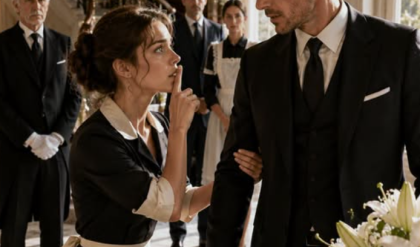
 The Mafia Boss Came Home Early—Then His Maid Grabbed His Arm and Whispered, ‘Don’t Make a Sound
The inhaler Gabriel had brought from the other supplier sat unopened in the cabinet.
Oliver’s regular inhaler was in my hand.
I looked at the label.
Prescribed through the charity clinic that had helped us after my insurance lapsed.
A clinic funded by the Lucia Lombardi Foundation.
My skin prickled.
Instead of giving it to him, I grabbed the sealed inhaler Gabriel had brought, checked the label, and prayed.
Within minutes, Oliver’s breathing eased in a way it had not eased in monThS.
The next morning, I took both inhalers to a pharmacist I trusted from my old hospital days, a woman named Denise who had once smoked too much, laughed too loudly, and caught three medication errors that would have killed patienTS.
She called me four hours later.
“Clara,” she said, “where did you get the first inhaler?”
“My son’s clinic.”
“You need to stop using it.”
My hand tightened around the phone.
“Why?”
“There’s something in it that shouldn’t be there.
I can’t identify everything without a lab, but it looks like a compounded agent that can trigger bronchial irritation over time.
Not enough to kill immediately.
Enough to keep a child sick.”
The kitchen floor seemed to drop beneath me.
“Say that again.”
“I’m saying somebody may have been making Oliver worse.”
I did not scream.
I did not faint.
I became very calm.
Preview
That frightened me more than anything.
By sunset, I was back at Sebastian’s mansion.
Gabriel opened the door himself.
“Clara.”
I slapped him.
The sound cracked through the foyer.
Two guards moved.
Gabriel lifted one hand, stopping them.
“You knew about Oliver’s medicine,” I said.
His cheek reddened.
“I suspected.”
“You suspected my son was being poisoned, and you used it to drag me here?”
“I used it to get you close enough to the only man with power to stop her.”
“Her.”
His eyes were tired.
“Lucia.”
I struck him again, but this time my hand shook.
Sebastian appeared at the top of the ramped hallway, his chair moving silently.
“What happened?”
I held up the inhaler.
“Your mother’s clinic has been poisoning my son.”
The words changed him.
I had seen Sebastian angry before.
This was not anger.
This was the death of the last mercy he had kept for blood.
“Gabriel,” he said, “lock the house.”
Sirens did not come.
Police did not flood the mansion.
Men like Sebastian Lombardi did not call the law until they had decided what version of the truth the law would receive.
But something shifted that night.
Phones disappeared from guards’ pockeTS. Doors were secured.
Lucia’s private driver was stopped at the gate.
Dr. Corbin, summoned for “an emergency,” arrived pale and sweating.
We confronted him in the old chapel behind the mansion.
I had not known there was a chapel.
It stood beyond a glass corridor, small and beautiful, with carved saints along the walls and candles trembling before a marble altar.
Beneath the altar, Gabriel said, was the Lombardi family crypt.
Of course there was.
Families like that did not bury secrets in filing cabineTS.
Dr. Corbin denied everything for eleven minutes.
Then Sebastian asked Gabriel to bring in the box.
It was a black medical case taken from Corbin’s car.
Inside were vials, syringes, records, and three prescription pads.
One bore Oliver’s name.
Corbin’s face collapsed.
“I was following instructions,” he whispered.
Lucia stood near the altar, pearls bright against her throat.
“Weak men always say that.”
Sebastian turned his chair toward her.
“Did you order it?”
She looked almost bored.
“Order what?”
“The drugging.
My surgeries.
The false reporTS. Clara’s father.”
Lucia’s eyes flicked to me.
For the first time, I saw hatred there.
Not hot hatred.
Not wild.
Something polished and preserved.
“Dr. Vale was sentimental,” she said.
“Sentimental men should stay away from powerful families.”
My grief took one step forward before my body did.
Gabriel caught my arm.
Sebastian’s voice shook.
“You killed him.”
Lucia sighed.
“I protected you.”
“From walking?”
“From becoming your father.”
The chapel seemed to hold its breath.
Lucia stepped closer to Sebastian, and the candles gilded her face until she looked almost saintly.
“Victor wanted to hand our family to prosecutors like a beggar offering coins.
He wanted to strip you of inheritance, name, protection.
He wanted you ordinary.” She spat the word softly.
“I saved you from that humiliation.”
“You put me in a chair for twenty years.”
“I kept you alive.”
“You kept me dependent.”
“I kept you mine.”
There it was.
The naked truth at the center of all that silk and stone.
Sebastian flinched as if she had struck him.
Then Gabriel opened the crypt.
The marble altar slid aside with a groan that seemed too ancient for a modern house.
Cold air rose from below.
Lucia’s face changed.
“Gabriel,” she said.
He did not answer.
We descended by narrow stone steps into a chamber lined with names.
Lombardi men and women rested there beneath carved slabs.
Victor Lombardi’s name stood at the center.
But his grave was already open.
Inside was no body.
Only a metal safe.
Sebastian looked at Gabriel.
“What is this?”
“Your father’s last insurance,” Gabriel said.
He opened the safe with a key from around his neck.
Inside were files sealed in plastic, an old videotape, and a bloodstained envelope addressed in Victor Lombardi’s handwriting.
To my son, if he ever stands.
Sebastian stared at the envelope.
He did not reach for it.
So I did.
My voice trembled as I read.
“Sebastian.
If you are hearing this, your body has done what I prayed it could.
I am sorry I made you carry my sins.
I am sorrier that I did not see your mother clearly until it was too late.
Trust Gabriel.
Trust Dr. Vale.
And protect the child if she was brave enough to keep him.”
I stopped.
The chamber spun.
Sebastian’s head turned slowly toward me.
“What child?” he asked.
Gabriel closed his eyes.
Lucia laughed once.
A terrible, delighted sound.
“Oh,” she said softly.
“So we have arrived there at last.”
I looked at Gabriel.
“What child?”
Gabriel’s voice was low.
“Clara, your sister Marian worked for Victor Lombardi’s accountant.”
My heart began to pound.
Marian.
My younger sister with red lipstick, reckless hope, and a laugh that made rooms warmer.
Marian, who had shown up at my door nine years ago pregnant, frightened, and silent about the father.
Marian, who died in a hit-and-run before Oliver turned one.
Marian, whose baby became my son because love is not biology; love is showing up at 3 a.m.
with clean sheets and medicine.
“No,” I whispered.
Sebastian looked lost.
“I never knew.”
Lucia smiled at him.
“Of course you didn’t.
You were busy being tragic.”
Gabriel’s face twisted with disgust.
“Marian and Sebastian met during one of his foundation evenTS. She hid the pregnancy because she found records in Victor’s files.
She knew Lucia was dangerous.”
I could barely breathe.
Sebastian’s voice broke.
“Oliver?”
No one answered.
They did not need to.
**Oliver was Sebastian Lombardi’s son.**
The boy I had rocked through fevers, the child whose drawings covered my refrigerator, the fragile little soul I had loved more than my own life—he was the heir to the very bloodline that had nearly killed him.
Lucia looked at me with a smile sharp enough to cut glass.
“Do you understand now, Mrs. Bennett? Your son was never an accident.
He was a problem.”
I lunged at her.
Gabriel held me back.
Sebastian did not move.
His face had gone white, but his eyes were alive with something I had never seen in him before.
Not rage.
Not grief.
Purpose.
He looked at Lucia and said, “You should have killed me when I was still willing to die.”
## PART FIVE — THE MAN WHO STOOD
The plan was not mine.
If it had been mine, it would have involved police, prosecutors, child protection, federal agents, and every clean light I could drag into that filthy house.
But Gabriel understood the city in ways I did not.
He knew which officers Lucia owned, which judges owed her favors, which prosecutors attended her Christmas dinners, and which reporters had taken envelopes to bury stories.
“Truth,” he told me, “is not enough in Chicago.
It needs witnesses.”
So Sebastian invited the witnesses.
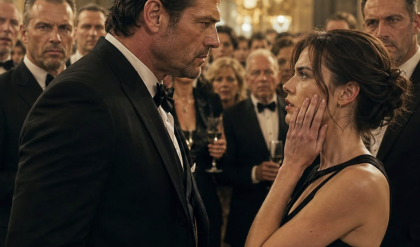
The next night, Lucia Lombardi hosted her annual foundation gala in the mansion ballroom.
She did not want to, but Gabriel had already sent the invitations in her name.
Judges came.
Priests came.
Hospital executives came.
Aldermen came.
Men who had kissed Lucia’s rings for twenty years arrived in tuxedos and dark suits, smiling beneath chandeliers while snow began falling beyond the windows.
Oliver was not there.
I had taken him to Denise’s sister in Wisconsin before dawn.
He cried when I left, not because he was afraid, but because children know when adults are lying about danger.
“Are you coming back?” he asked me.
I knelt in front of him and fixed his scarf.
“Always.”
“That’s not an answer.”
It was such an adult thing to say that it nearly broke me.
I kissed his forehead.
“Yes, Oliver.
I am coming back.”
Then I gave him the clean inhaler and walked away before he could see my face.
At the gala, I wore a black dress Gabriel had sent without asking my size.
It fit perfectly, which made me want to burn it.
Sebastian waited in a private room off the ballroom, dressed in a dark suit, his face pale but composed.
On a table before him lay his father’s files, my father’s notebook, Corbin’s drug records, the inhaler report, and the videotape Gabriel had converted into a digital file.
Evidence.
Enough to destroy Lucia if the right people saw it at the same time.
Not enough if they saw it one by one.
Sebastian looked at me.
“You can still leave.”
“So can you.”
He glanced down at his legs.
“Not quickly.”
I laughed despite everything.
For one second, we were just two exhausted adults making a joke in a room full of ghosTS.
Then his expression softened.
“I did not know about Oliver,” he said.
“I believe you.”
“He is your son.”
“Yes.”
“I won’t take him from you.”
The words struck me harder than I expected.
I looked away.
“No, you won’t.”
“I mean it, Clara.”
“I know.”
“My name has hurt him enough.”
I turned back to him.
“Names don’t hurt children.
People do.”
Sebastian absorbed that.
Then he reached for my hand.
His fingers were cold.
“I don’t know how to be a father,” he said.
“Nobody does at first.”
“You did.”
“No,” I said.
“I was terrified.
I still am.”
He looked toward the ballroom doors.
“Then perhaps terror is a beginning.”
Gabriel entered.
“It’s time.”
Sebastian nodded.
I moved behind his chair.
He stopped me.
“No.”
I understood then.
My throat tightened.
“Sebastian—”
“You said the body tells the truth.” His hands gripped the wheels of his chair.
“Tonight mine will.”
Gabriel brought the braces.
I locked them around Sebastian’s legs with hands that did not feel like mine.
We had practiced twice.
Only twice.
Both attempts had ended with him collapsing into the chair, shaking with pain.
This was madness.
This was necessary.
The ballroom quieted when the doors opened.
Lucia stood near the podium beneath a banner bearing her foundation’s name.
She looked perfect.
Silver hair.
Black silk.
Pearls.
A widow saint surrounded by men who owed her their souls.
Sebastian rolled into the room.
Murmurs passed through the guesTS. Some had not seen him in years.
Others bowed their heads, either out of respect or fear.
Lucia’s eyes narrowed when she saw me behind him.
“My son,” she said into the microphone, smiling for the crowd.
“What a surprise.”
Sebastian took the microphone from its stand.
“Yes,” he said.
“That is what my mother has always been best at.
Surprises.”
A few people laughed politely, then stopped when they saw Lucia’s face.
Sebastian looked over the room.
“For twenty years, Chicago has been told a story about my family.
A car bomb.
A dead father.
A crippled son.
A grieving widow.
A criminal empire held together by necessity.”
Lucia moved closer.
“Sebastian, not tonight.”
He looked at her.
“Especially tonight.”
Gabriel stepped to the media console.
The ballroom screens lit up.
Victor Lombardi’s face appeared—older, thinner, recorded shortly before his death.
The room gasped.
Some men reached for phones that no longer had service.
Gabriel’s people had already sealed the signals.
Victor spoke in a gravelly voice.
He named judges.
Police commanders.
AccounTS. Kill orders.
PaymenTS. He named Lucia.
Then came my father’s report.
Then Corbin’s records.
Then the lab results from Oliver’s inhaler.
The ballroom erupted.
Lucia did not move.
Her eyes stayed on Sebastian, and in them I saw something worse than fear.
I saw calculation.
“You ungrateful boy,” she said, not into the microphone, but loud enough for the first rows to hear.
Sebastian’s face tightened.
“You murdered my father.”
“I built what he was too weak to hold.”
“You murdered Dr. Vale.”
“He interfered.”
“You poisoned a child.”
At that, the ballroom went still again.
Sebastian’s voice broke, but he did not look away.
“You poisoned my son.”
The room changed.
There are crimes powerful people forgive.
Money crimes.
Political crimes.
Violence against other violent men.
But a child fighting for breath in a cheap apartment while a foundation widow smiled at hospital cameras—that was a different kind of sin.
Even corrupt men like to believe there is a floor beneath them.
Lucia had found the basement.
Preview
She turned to the crowd.
“This is absurd.
My son is unwell.
He has been manipulated by this woman, a desperate therapist with debts and—”
Sebastian moved.
He placed one hand on the arm of his wheelchair.
Then the other.
I stepped beside him, ready to catch him.
Gabriel stood on the other side.
Sebastian whispered, “Don’t touch me unless I fall.”
I backed away.
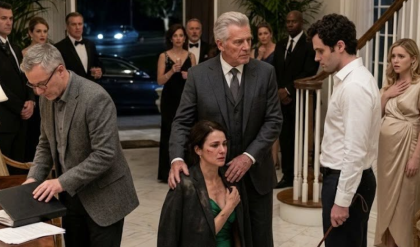
Slowly, with a sound like a man tearing himself out of a grave, **Sebastian Lombardi stood.**
The ballroom gasped as one body.
His legs shook violently.
Pain carved itself across his face.
His hands clenched.
For one terrible moment, I thought he would collapse.
But he did not.
He stood crooked.
He stood trembling.
He stood alive.
Lucia stared at him as if he were the ghost.
Sebastian took one step.
Then another.
The room did not breathe.
He reached his mother and looked down at her for the first time in twenty years.
“You don’t get to call this love,” he said.
Lucia’s face crumpled—not with regret, but with rage.
From inside her sleeve, she drew a small silver pistol.
Everything happened at once.
Someone screamed.
Gabriel moved.
I lunged toward Sebastian.
Lucia aimed not at him, but at me.
Because she had understood before anyone else did.
Sebastian’s body could be broken again.
Gabriel could be killed.
Evidence could be challenged.
But Oliver’s mother—his real mother in every way that mattered—was the one person who would never stop.
The gun fired.
The sound cracked open the room.
Pain burned across my side, hot and stunning.
I fell hard against the marble floor.
Sebastian shouted my name.
Gabriel tackled Lucia.
Men rushed forward.
The chandelier blurred above me like a field of stars.
Sebastian dropped beside me.
Not fell.
Dropped.
On his knees.
His hand pressed against my wound.
“Clara.
Stay with me.”
I tried to speak, but breath came shallow.
It was almost funny.
After all those nights fearing Oliver’s breathing, here I was counting my own.
“One,” Sebastian said, voice shaking.
“Two.
Stay with me.
Three.”
I smiled because he had stolen my words.
“You’re terrible at comforting people,” I whispered.
He laughed once, broken and wet-eyed.
“You can complain later.”
“Oliver…”
“Safe,” he said.
“He is safe.
I swear it.”
Around us, the world roared.
Sirens.
ShouTS. Lucia screaming that they had no right.
Gabriel ordering men to open doors for federal agents who had been waiting beyond the gates, not bought police, not local favors, but witnesses Gabriel had gathered from outside Lucia’s reach.
I learned later that Gabriel had spent ten years preparing for that night.
Ten years collecting records.
Ten years pretending obedience.
Ten years waiting for one impossible thing: **proof that Sebastian’s body had not died the way Lucia said it had.**
And the final proof had not been the files.
It had been Sebastian standing in front of everyone Lucia had ever controlled.
I survived.
The bullet missed anything vital, though it left a scar that ached when rain came off the lake.
Lucia Lombardi went to prison in a black dress and pearls, photographed by every newspaper in America.
Dr. Corbin testified in exchange for a sentence long enough to make him weep.
Judges resigned.
Aldermen vanished.
Priests gave statemenTS. Hospitals returned donations they had once accepted with smiling photographs.
Chicago pretended to be shocked.
Cities are good at that.
Oliver recovered slowly after we threw away every medication touched by Lucia’s clinic.
His lungs did not become perfect, but they became his again.
Within months, he could run half a block without bending over.
The first time he did it, he looked back at me with astonishment, as if air itself had become a gift.
Sebastian watched from the sidewalk, leaning on two black canes.
Oliver stopped in front of him.
“So,” my son said, squinting up at the most feared man in Chicago, “you’re my dad?”
Sebastian looked more frightened than he had facing a ballroom full of enemies.
“Yes,” he said carefully.
“But Clara is your mother.”
Oliver considered that.
“I know.”
“And I would like to know you, if you allow it.”
Oliver tilted his head.
“Do you like dragons?”
Sebastian glanced at me.
I raised my eyebrows.
He looked back at Oliver.
“I am prepared to learn.”
That was how it began.
Not with inheritance papers.
Not with newspapers.
Not with the Lombardi name being scrubbed, repaired, argued over by lawyers and historians.
It began with a boy teaching a dangerous man how to draw wings.
Months later, after the trials started, Gabriel came to my clinic.
I had reopened in a better neighborhood, though I kept my old battered treatment table because some things earn their place by surviving.
He stood near the door, hat in hand.
“I owe you an apology,” he said.
“You owe me several.”
“Yes.”
He looked thinner.
Less like a weapon.
More like a man.
“I thought forcing you was the only way,” he said.
“That was arrogance.”
“That was cruelty.”
He nodded.
“Yes.”
I waited.
He swallowed.
“Victor told me once that a man may spend his whole life becoming useful and never become good.
I think I understand him now.”
I did not forgive him that day.
Forgiveness, like healing, cannot be dragged into a room and ordered to perform.
But I let him sit.
That was something.
The last surprise came one year after the gala.
Sebastian asked me to meet him at the old Lombardi mansion, now emptied of guards and ghosTS. He could walk short distances by then, slowly and painfully, but proudly.
He had sold most of the property and turned the foundation inside out until investigators, accountants, and victims’ families had taken what they were owed.
The mansion by the lake was the final piece.
“I’m giving it away,” he said.
“To whom?”
He handed me a folder.
Inside were architectural drawings.
A pediatric respiratory rehabilitation center.
Oliver’s name was not on it.
Mine was not on it.
Lombardi’s was nowhere to be found.
The building would be called The Adrian Vale House.
For my father.
I could not speak.
Sebastian stood beside the window, looking out at Lake Michigan.
Winter light silvered his hair at the temples.
Pain had not made him gentle, not exactly.
But truth had made him careful.
“There’s one more thing,” he said.
Of course there was.
He opened a small box and removed a flash drive.
“Gabriel found this in my father’s safe after the trial.
It was hidden in the lining.”
“What is it?”
“A recording.”
We played it on an old laptop in the empty ballroom where Lucia had fallen.
Victor Lombardi’s voice filled the room again, weaker this time.
“If this reaches Clara Vale Bennett,” he said, “then Adrian’s daughter has done what none of us deserved to ask of her.
Clara, your father knew the truth before I did.
He knew my wife would kill to keep power.
He also knew something else.”
Static hissed.
I gripped the edge of the table.
Victor continued.
“The night before he died, Adrian told me he had seen your sister Marian leaving my son’s room at the rehabilitation hospital.
He suspected she was pregnant later, but he never told me.
He said some children deserve a chance to be born outside the wars of their fathers.”
My eyes filled.
Sebastian’s hand found mine.
Victor’s voice softened.
“Adrian did not die because he failed to save Sebastian.
He died because he saved Oliver first.”
I stopped breathing.
The recording went on.
“Lucia had already found Marian.
Adrian hid her.
Gave her money.
Changed her clinic records.
He kept that child out of our family’s hands for as long as he could.
If Oliver is alive, it is because your father chose him over fear.”
The recording ended.
For a long time, the ballroom was silent.
All my life, I had believed my father left me with grief.
But he had left me Oliver.
**The miracle had never been in my hands.
It had been in his courage.**
I cried then—not the sharp tears of panic or the silent tears of exhaustion, but the deep, shaking tears of a daughter who had finally heard her father say goodbye in the only language he had ever trusted: protection.
Sebastian held my hand until the storm passed.
A year earlier, I had entered that mansion as a broke single mother in worn scrubs, chasing money I hated needing.
I had touched a lifeless foot and watched Chicago’s most feared men forget how to breathe.
I thought I was waking Sebastian Lombardi’s body.
I thought I was exposing a crime.
I thought I was saving my son.
But the truth was stranger, crueler, and far more beautiful.
**My father had buried a boy inside a secret.
Lucia had buried a man inside a chair.
Chicago had buried its sins beneath marble and money.**
And one night, because a desperate mother refused to let hope die quietly, **every grave opened.**
Oliver is twelve now.
He still carries an inhaler, though mostly out of habit.
He draws dragons with enormous wings and small, stubborn hearTS. Sebastian walks with a cane and complains about stairs like an old man twice his age.
On Sundays, we visit Mrs. Alvarez, who insists Sebastian is too thin and feeds him until he looks afraid.
Sometimes, Oliver asks about the Lombardi name.
Sometimes, he asks about Marian.
Sometimes, he asks whether bad blood can turn good.
I always tell him the same thing.
“Blood is only where you begin,” I say.
“Love is where you decide to go.”
Last spring, at the opening of The Adrian Vale House, Oliver stood between Sebastian and me while children with oxygen tubes and nervous parents entered the bright new building by the lake.
No chandeliers.
No armed guards.
No locked chapel.
Just sunlight, clean air, and rooms designed for healing.
Oliver slipped one hand into mine and one hand into Sebastian’s.
Then he looked up at us and smiled.
For the first time in twenty years, the Lombardi mansion heard children laughing.
And this time, no one dared bury the sound.
“`
”