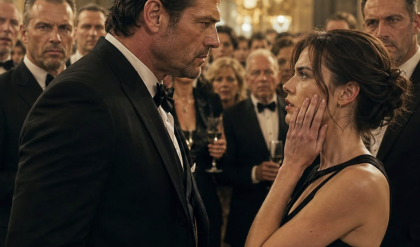
At My Cousin’s Engagement Party, She Shoved Me Down the Stairs — The MRI Exposed Years of “Accidents”
My cousin smiled before shoving me down the staircase at her engagement party, then laughed and called it “just a prank.” My relatives surrounded her instead of helping me and told the paramedics I had slipped.
I stayed quiet while they rewrote the story.
The next morning, an ER doctor studied my MRI, left the room, returned with hospital security, and reached for the phone…
The last thing I saw before I fell was Brittany’s smile.
Not a startled smile.
Not the nervous expression of someone realizing she had made a terrible mistake.
It was satisfied.
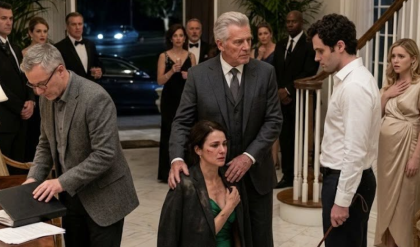
We were at her engagement party, surrounded by polished wood, crystal lights, champagne glasses, and relatives dressed for photographs.
I had just reached the top of the staircase when Brittany stepped close behind me.
“Oh my God, watch your step,” she said.
Then both hands hit my shoulders.
My heel caught the edge of the stair.
The room flipped.
I struck the railing, then the steps, then the marble floor below.
For several seconds, I could not move.
My white dress was stained, my neck felt wrong, and every breath came shallow.
The guests gasped.
Then Brittany laughed.
“It was just a prank,” she called from the landing.
“Claire always overreacTS.”
That was when I understood this would become my fault.
Nobody rushed toward me at first.
Several relatives hurried to Brittany, asking whether she was okay because her party had been interrupted.
My aunt Linda looked down at me with irritation instead of concern.
“We don’t need an ambulance,” she snapped.
“Claire’s always dramatic.”
“I hit my head,” I whispered.
“You slipped,” Brittany said immediately.
“You know how clumsy you’ve always been.”
She never asked whether I was hurt.
She looked at the stain spreading across my dress and frowned.
“I can’t believe this happened during my party.”
A woman from Brittany’s office finally knelt beside me.
I had never met her before, but she was the first person who treated me like I mattered.
“Don’t move her,” she said firmly.
“Call an ambulance.”
Another guest ignored my family’s protests and called 911.
When the paramedics arrived, one of them placed a cervical collar around my neck and asked what had happened.
Before I could answer, my relatives spoke over me.
“She slipped.”
“It was an accident.”
“She lost her balance.”
I looked toward Brittany.
She held my gaze from the top of the stairs, then smiled again.
She knew they would protect her.
They always had.
My name is Claire, and for most of my life, I had been the family joke.
I was the clumsy one.
The dramatic one.
The girl who supposedly fell, slipped, startled animals, and turned harmless moments into problems.
At twelve, I broke my collarbone after falling from a horse.
Brittany had slapped the animal’s side as I climbed into the saddle, but the adults said I had frightened it.
At sixteen, she came up behind me on a dock.
A moment later, I was underwater.
Everyone laughed when I climbed out shaking.
“You should have seen your face,” Brittany said.
“It was only a joke.”
Years later, I fell down basement stairs and fractured my wrist.
Brittany had been there too, but by then I had stopped questioning the version my family gave me.
“No, Claire.
That isn’t what happened.”
“You’re remembering it wrong.”
“You’ve always been dramatic.”
After hearing those words long enough, I stopped trusting my own memory.
The ambulance ride passed in flashes of bright lights and pain.
At the hospital, doctors ordered CT scans.
When I told them my neck felt unstable, they added an MRI and kept me overnight.
Morning light was coming through the hospital window when an older ER doctor entered.
He introduced himself, opened the scans on a screen, and began studying them.
He said nothing for several minutes.
He zoomed in.
Measured something.
Then his expression changed.
First confusion.
Then concern.
Finally, alarm.
“I’ll be right back,” he said.
He left carrying the scan tablet.
When he returned, two hospital security officers followed him into the room.
He closed the door, walked to the wall phone, and pressed three numbers.
“I need law enforcement in the emergency department immediately.”
My stomach tightened.
“Am I dying?”
He shook his head.
“No, Claire.
That isn’t why I called.”
Relief lasted less than a second.
“Then why are the police coming?”
He pulled his chair closer and looked at the screen again.
“Because what I’m seeing does not match one fall down a staircase.”
The room went silent except for the heart monitor.
He asked about the horse, the lake, the basement stairs, and every injury I had been taught to dismiss.
For the first time, nobody interrupted or corrected me.
The doctor turned the monitor slightly in my direction.
“Scans don’t only show today’s injury,” he said.
“Sometimes they show a pattern.”
My body had been keeping a record even when I had been taught not to believe myself.
A knock came at the door.
Two detectives entered, pulled up chairs, and asked me one question no one in my family had ever allowed me to answer honestly.
“Claire, has Brittany hurt you before?”
I looked down at my hands, remembered every laugh after every “accident,” and finally opened my mouth…
Part 1:
Claire.
The last thing I saw before my world turned upside down was my cousin’s smile.
Not the kind of smile someone wears when they’re celebrating an engagement.
It was the satisfied grin of someone who had been waiting for the perfect moment.
“Oh my God, watch your step,” Brittany laughed.
Her hands slammed into my shoulders.
I stumbled backward.
My heel caught the edge of the top stair.
Then gravity took over.
The staircase became a blur of polished wood, crystal lights, and screaming voices as I crashed down step after step.
My shoulder struck the railing.
Something cracked near my neck.
My head hit the marble floor hard enough that the room exploded into white light.
For a few terrifying seconds, I couldn’t move.
Warm blood spread across the front of my white dress.
Guests gasped.
Someone dropped a champagne glass.
Then, instead of panic, I heard laughter.
“It was just a prank,” Brittany called down from the landing, covering her mouth as though she couldn’t stop laughing.
“Clare always overreacTS.”
Nobody rushed to help me.
Instead, several relatives hurried toward Brittany, asking if she was okay because the party had been interrupted.
I lay there, starring at the ceiling, trying to breathe, wondering how I had somehow become the problem again.
I didn’t know it yet, but less than 24 hours later, an emergency room doctor would look at my MRI, quietly leave the room, return with hospital security, and dial 911.
Someone finally knelt beside me.
It wasn’t my aunt.
It wasn’t my uncle.
It wasn’t even my mother.
It was one of Britney’s co-workers, a woman I’d never met before.
“Don’t move her,” she said firmly.
“Call an ambulance.”
“We don’t need an ambulance,” my aunt Linda snapped almost immediately.
“Claire’s always been dramatic.”
“I hit my head,” I whispered.
“You slipped,” Brittany interrupted before I could say anything else.
“You know how clumsy you’ve always been.”
She was still standing at the top of the staircase, perfectly composed in her expensive engagement dress.
Not once did she ask if I was hurt.
Instead, she frowned at the growing stain of blood on my dress.
“I can’t believe this happened during my party.”
The words landed harder than the fall.
Two paramedics arrived within minutes after another guest ignored my family’s protests and called 911.
Anyway, as they fitted a cervical collar around my neck, one of them asked gently, “Can you tell me exactly what happened?”
Before I could answer, three voices spoke over me.
“She slipped.”
“It was an accident.”
“She lost her balance.”
I turned my head just enough to look at Brittany.
She held my gaze.
Then, slowly, she smiled—not nervous, not guilty, confident.
She knew exactly what everyone around her was doing: protecting her.
Part 2 :
The ride to the hospital passed in flashes of pain, bright ambulance lights, and questions I struggled to answer.
CT scans came first, followed by additional imaging after I complained that my neck felt strangely unstable whenever I tried to move.
The emergency physician ordered an MRI before releasing me for observation.
Morning sunlight filtered through the hospital window by the time the results returned.
An older ER doctor introduced himself, pulled my scans onto the screen, and began studying them.
Minutes passed, then several more.
He leaned closer, zoomed in, measured something.
His expression slowly changed.
Confusion, concern, then unmistakable alarm.
Without saying a word, he stood up.
“I’ll be right back.”
He left the room carrying the scan tablet.
When he returned, two hospital security officers quietly followed him inside.
He closed the door behind them, picked up the phone on the wall, pressed three numbers, and said calmly, “I need law enforcement in the emergency department immediately.”
I stared at him, completely stunned.
“What? What did you find?”
He looked back at my MRI one more time before answering.
The room fell silent except for the steady beep of the heart monitor.
I looked from the doctor to the two hospital security officers standing quietly near the door.
My stomach tightened.
“Doctor,” I said, my voice barely above a whisper.
“Am I dying?”
He pulled his chair closer to my bed and shook his head.
“No, Claire, that’s not why I called.”
Relief washed over me for only a second.
“Then why are the police coming?”
He folded his hands together.
“Because what I’m seeing doesn’t match a single fall down a staircase.”
My heart skipped.
“I don’t understand.”
“I’d like to ask you a few questions first.”
I nodded.
“Have you ever had injuries to your neck before?”
“I—I don’t think so.”
He looked back at the scan.
“Broken collarbone.
When I was 12.”
“How did that happen?”
I answered automatically.
“I fell off a horse.”
He wrote something down.
“And who was with you?”
I hesitated.
“My cousin Brittany.”
He simply nodded.
Part 3 :
“No conclusions yet,” he said.
“Just tell me exactly what happened.”
As I searched my memory, images I hadn’t thought about in years began surfacing.
The horse.
I remembered Brittany slapping its side just as I was climbing into the saddle.
The animal had bolted.
Everyone laughed afterward.
“Clare startled the horse,” my uncle had insisted.
Even I had believed it.
Another memory followed almost immediately.
I was 16.
Our extended family had rented a cabin by a lake.
Brittany came up behind me while I stood on the dock.
The next thing I knew, I was underwater.
When I climbed back out, shivering and crying, everyone laughed.
“You should have seen your face,” Brittany had said.
“It was only a joke.”
When I slipped on the wet dock and hit my shoulder, the conversation became about how clumsy I was, not why I’d been pushed.
There were other things, I admitted quietly.
The doctor didn’t interrupt.
“When I was a kid, I broke my wrist.”
[snorts]
“How?”
“I fell down the basement steps.”
“And was Brittany there?”
“Yes.”
“What happened immediately before the fall?”
I opened my mouth.
Nothing came out.
I realized I couldn’t remember.
Not because it hadn’t happened.
Because every time I’d tried to explain something over the years, someone else had corrected my memory.
“No, Claire.
That’s not what happened.”
“You’ve always been dramatic.”
“You imagine that?”
After hearing those words enough times, I’d stopped trusting myself.
The doctor turned the computer monitor toward me.
He didn’t point to any specific image.
Instead, he spoke carefully.
“When physicians review scans, we aren’t only looking for today’s injury.”
I frowned.
“We’re trained to recognize patterns.”
My pulse quickened.
“Patterns?”
“Yes.”
He chose each word with obvious care.
Claire’s pulse quickened.
“Patterns?” I repeated.
The doctor nodded slowly.
“Yes.
A single accident usually leaves injuries that heal in predictable ways.
But your MRI, CT scans, and old X-rays tell a very different story.”
He turned the monitor toward me.
“There are healed fractures in your left clavicle that match what you described from the horse incident.
There is an old compression injury near your cervical spine, consistent with sudden force from behind.
There are signs of previous trauma to your shoulder, wrist, and ribs that occurred years apart.”
He paused.
“But what concerns me isn’t that you’ve been injured multiple times.”
His eyes met mine.
“It’s that every injury fits the same mechanism.”
I stared at him.
“What mechanism?”
“Being pushed.”
The word landed harder than the staircase ever had.
For years I had replayed every “accident” in my mind, always ending with the same conclusion—that I must have been careless.
The doctor continued gently.
“People fall forward because they lose balance.
Your injuries repeatedly show lateral impact first.
Your body reacted as if force was applied before you fell.”
A knock sounded at the door.
Two detectives entered, introduced themselves, and quietly took seats beside my bed.
Detective Sarah Morales spoke first.
“Claire, the emergency physician asked us to come because he believes your injuries deserve further investigation.”
She opened a notebook.
“We’re not here to pressure you.
We simply want the truth.”
I swallowed.
“I don’t even know what the truth is anymore.”
She leaned forward.
“That happens more often than you think.”
The doctor excused himself, leaving the detectives with me.
For the next hour, they didn’t interrogate me.
They listened.
I told them about the horse.
The dock.
The basement stairs.
Every birthday, holiday, and family gathering where Brittany’s “pranks” somehow ended with me in pain while everyone laughed.
Detective Morales stopped writing.
“How many times has your cousin been present when you’ve suffered a serious injury?”
I counted silently.
“One…”
“Two…”
The number kept growing.
“Seven.”
Neither detective said a word.
The silence was answer enough.
Just then, another knock interrupted us.
The woman from Brittany’s office—the one who had called the ambulance—stood nervously outside my room.
“My name is Rachel,” she said.
“I… I think I need to tell someone what I saw.”
The detectives invited her inside.
Rachel took a deep breath.
“I was standing near the staircase.”
She looked at me apologetically.
“I saw Brittany push you.”
The room became completely still.
“She didn’t trip you accidentally?”
Rachel shook her head.
“No.”
“She looked around first.”
“She smiled…”
Rachel’s voice trembled.
“…and then she shoved Claire with both hands.”
Detective Morales looked up immediately.
“Would you be willing to give a formal statement?”
“Yes.”
Rachel nodded without hesitation.
“I’ve been sick about it all night.”
She reached into her handbag.
“I also have something else.”
She placed her phone on the bedside table.
“I was recording the room because my fiancé couldn’t attend.”
 Meghan Markle criticised over Lilibet’s dress in new Disneyland photos but trolls got it wrong
My heart nearly stopped.
“I wasn’t filming Claire,” Rachel explained.
“I was filming the decorations.”
She opened the video.
The recording showed the grand staircase.
Guests laughing.
Music playing.
Then Brittany entered the frame.
She glanced over both shoulders.
Stepped behind me.
Placed both hands against my back.
And pushed.
It lasted less than two seconds.
But there was no ambiguity.
No stumble.
No accident.
No prank.
Only intent.
Detective Morales immediately requested a copy of the original file.
Within an hour, officers had obtained a warrant.
By late afternoon, Brittany was brought in for questioning.
She denied everything.
Then she saw the video.
Her confidence vanished.
But the investigation didn’t stop there.
Hospital records from the past twenty years were subpoenaed.
Insurance claims were reviewed.
School accident reports were reopened.
Former classmates were interviewed.
One after another, people remembered moments they had dismissed as childish teasing.
A riding instructor recalled Brittany startling my horse before pretending to comfort me.
A camp counselor remembered Brittany laughing after I fell from a dock.
A neighbor admitted he had seen Brittany shove me during a family barbecue years earlier but assumed we were “just roughhousing.”
Each witness remembered a small piece.
Together, they revealed a pattern.
The district attorney later described it as escalating acts of intentional physical harm disguised as accidenTS.
When the case finally went to trial nearly a year later, my family sat behind Brittany.
Not behind me.
That hurt more than I expected.
But this time, they couldn’t rewrite reality.
The jury watched Rachel’s video.
They studied my medical records.
They listened to expert testimony from orthopedic specialists who explained how my injuries were consistent with repeated force rather than repeated clumsiness.
Then the emergency physician took the stand.
He held up my MRI.
“I wasn’t looking for a crime,” he testified.
“I was looking for a spinal injury.”
He looked toward the jury.
“My patient told me she had always been clumsy.
Her body told a different story.”
That sentence echoed through the courtroom.
After only four hours of deliberation, the jury returned.
“On the charge of aggravated assault…”
The foreperson looked directly at Brittany.
“Guilty.”
She didn’t cry.
She didn’t apologize.
She simply stared at me with the same expression she had worn at the top of the staircase.
Except this time…
No one believed her smile.
Months later, I stood on the porch of my new home, holding the final paperwork from the civil settlement.
It wasn’t the money that mattered.
It was the acknowledgment.
For the first time in my life, every official record reflected what had actually happened.
I wasn’t careless.
I wasn’t dramatic.
I wasn’t imagining things.
I had survived years of abuse hidden behind the word “accident.”
Sometimes justice doesn’t begin with a confession.
Sometimes it begins with a doctor who notices that your scars are telling a story you’ve spent your entire life being taught to deny.
And in the end, it wasn’t my family who finally believed me.
It was science.
My MRI had remembered the truth long before I was brave enough to say it aloud.