Everyone Mocked the Blind Girl at the Gala—Until the Mafia Boss Saw What She Could Really Do
The Blind Woman They Mocked At The Billionaire Gala — Until She Heard The Bomb No One Else Could See
They laughed when Vivian Mercer stumbled on the marble steps.
They called her helpless while a bomb ticked beneath a gold statue five feet away.
Then the most dangerous man in New York realized the blind woman was the only person in the room who could save them all.
PART 1 — The Woman They Thought Could Not See
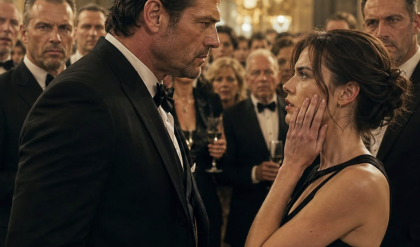
The Baccarat crystal stopped clinking the moment Vivian Mercer stumbled.
It was not a dramatic fall.
Not the kind people remembered because of spilled blood or broken bones.
It was worse than that.
It was small, humiliating, perfectly timed cruelty dressed as an accident.
Her shoulder struck a waiter’s tray.
Champagne flutes tilted, trembled, then crashed against the Italian marble floor in a bright, violent spray.
Gasps rose first.
Then silence.
Then the kind of laughter people use when they are relieved the embarrassment belongs to someone else.
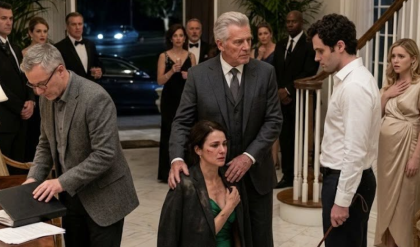
Vivian stood near the shattered glass in a couture black gown, her white cane folded inside her clutch, her sightless hazel eyes facing a room that believed darkness made her harmless.
The Plaza Hotel ballroom smelled like deceit.
To everyone else, the air was thick with jasmine, Dom Pérignon, polished silver, expensive perfume, and the creamy sweetness of wedding-cake frosting from the dessert display.
To Vivian, the room had sharper layers.
Nervous sweat beneath silk.
Gun oil beneath tuxedo jackeTS. Hot stage lights warming velvet.
The faint metallic breath of hidden security equipment.
And somewhere near the auction dais, beneath the scent of old gold and fresh varnish, a pulse she did not yet understand.
Tick.
Not a clock.
Not exactly.
“Poor thing,” Penelope Croft crooned nearby, her diamonds clicking against one another as she lifted a hand to her throat.
“Shouldn’t someone have given her a handler?”
A few people laughed.
Vivian knew Penelope’s voice before the woman spoke.
Pharmaceutical heiress.
Social predator.
A laugh like crystal being dragged across stone.
Two minutes earlier, Penelope had stepped backward and driven a red-soled heel into the side of Vivian’s foot, hard enough to make pain flash white through the darkness.
Vivian had shifted her weight at the last second.
Not enough to avoid the stumble.
Enough to avoid falling into glass.
Gregory Hayes, chairman of the auction committee, sighed into the silence like she had inconvenienced the entire tax bracket.
“Someone clear this before Ms.
Mercer hurts herself.”
Ms.
Mercer.
Not Vivian.
Not the authenticator Sotheby’s and half the private collectors on the East Coast paid impossible sums to consult.
Just the blind woman who had made a mess.
High above the ballroom, on the shadowed VIP balcony, Roman Navarro watched without blinking.
He had not come to the St.
Jude Charity Gala for champagne or philanthropy.
Roman did not confuse charity with virtue, and he trusted no room where billionaires smiled beside politicians they secretly owned.
To the public, he was the head of Navarro Global Logistics.
To the underworld, he was the man who made ports, borders, and men with ambitions understand their limiTS.
His lieutenant, Winston, stood behind him.
“They’re humiliating her,” Winston murmured.
Roman’s pale blue eyes stayed fixed on Vivian.
“No,” he said.
“They’re underestimating her.”
Because Roman had seen the step Penelope took.
He had seen Vivian shift before the heel struck.
He had seen her hands lower during the stumble, not flailing, not panicked, but calculating space, glass, distance, balance.
She had moved like someone reading the room through the floor.
Down below, Gregory approached Vivian and grabbed her arm too roughly.
Roman’s jaw tightened.
“You’re here to do a job,” Gregory snapped.
“Let’s get this finished so the professionals can begin the bidding.”
Vivian slowly turned her face toward Penelope.
“I may be blind, Ms.
Croft,” she said, voice smooth as deep water, “but at least I didn’t wear a counterfeit Patek Philippe to a millionaire’s gala.
The escapement on your wrist is a quarter second off.
It sounds cheap.”
The laughter died.
Penelope’s breath caught.
Roman’s mouth curved.
“Fascinating,” he whispered.
Gregory’s face flushed red.
“Enough.
Bring her to the stage.”
Vivian let herself be guided toward the Imperial Falcon, the evening’s centerpiece: gold, emerald, Romanov provenance, opening bid twenty million dollars.
But as she neared the pedestal, the strange pulse beneath the varnish sharpened.
Tick.
Tick.
Hum.
Vivian’s fingers touched the statue.
Gold too warm.
Emeralds too perfect.
Base too hollow.
Then she felt it.
A concealed mechanism waking beneath her hands.
Gregory tapped the microphone.
“Well, Ms.
Mercer? Is it authentic?”
Vivian pulled her hands back.
The ballroom waited for her humiliation.
Instead, she lifted her face toward the lights and said, “No.
It’s a forgery.”
Gasps erupted.
Then she added, calm and clear, “And if everyone keeps standing here, it will also be your coffin.”
PART 2 — The Falcon With Death Inside
At first, no one moved.
That was the terrible arrogance of wealth.
Even danger had to be translated into something socially acceptable before the room believed in it.
The billionaires stared.
The socialites blinked under chandelier light.
The politicians looked toward their security details as if danger were something staff could quietly remove from the evening.
Gregory Hayes recovered first because pride often outruns sense.
“Security,” he barked, voice cracking through the microphone.
“Remove her from the stage.”
Vivian did not step back.
She could feel the heat of the lights on her skin, the vibration of the speakers beneath the platform, the shift of bodies in front of her, the crowd turning restless because she had interrupted the performance of importance.
She placed one hand on the edge of the pedestal, not touching the statue now, only grounding herself.
“The gold is modern,” she said.
“The alloy was cast recently.
The emeralds are synthetic.
Laser-cut.
Too clean for the provenance you claim.”
A murmur spread through the ballroom.
Penelope hissed, “This is ridiculous.”
Vivian continued.
“But the forgery is not the most dangerous part.”
Gregory turned toward her, fury thick in his breathing.
“You have no idea what you’re saying.”
“I know exactly what I felt.”
“You felt wrong.”
Vivian’s head tilted.
It was a small movement.
Enough to silence the nearest row.
“The base is hollow,” she said.
“There is a receiver inside it.
A timer.
A charging capacitor.
And enough explosive material to turn this stage into shrapnel.”
The room broke.
Not all at once.
Panic rarely begins as a scream.
It begins as disbelief moving through expensive bodies too slow to save themselves.
A woman dropped her clutch.
A senator stumbled backward into a chair.
Someone laughed once, a high and hysterical sound, before the reality reached him.
Then the screaming started.
Chairs scraped.
Crystal shattered.
Men in tuxedos shoved women aside.
A donor who had spent the evening preaching compassion knocked an elderly board member to the floor trying to reach the exit first.
Penelope Croft tripped over her own satin train and landed on the same marble she had used to humiliate Vivian minutes earlier.
Vivian heard all of it.
The chaos.
The footsteps.
The fear.
And beneath it, still steady.
Tick.
Tick.
Hum.
“Nobody moves.”
The command did not come from security.
It came from the grand staircase.
Roman Navarro descended with the unhurried calm of a man walking into a room he had already conquered.
His voice rolled through the ballroom, low and absolute, and panic froze because every person there knew that if Roman Navarro gave an order, survival often depended on obeying it.
Six of his men appeared at the ballroom perimeter.
They did not wave weapons.
They did not need to.
The heavy brass doors closed.
The sound echoed through the gilded room like a verdict.
Vivian did not turn toward him.
She already knew where he was.
Cedarwood.
Bergamot.
Gun oil.
Expensive wool warmed by body heat.
A heartbeat too controlled to belong to a frightened man.
Roman stopped beside her on the stage.
“You’re certain?” he asked.
His voice was meant only for her.
“I can hear the capacitor charging, Mr. Navarro.”
A faint pause.
“You know my name.”
“I know many things.”
“How much time?”
Vivian listened.
The ballroom trembled with muffled sobs.
Gregory was breathing too fast near the stage curtains.
Penelope’s bracelet clicked against the marble as she pushed herself upright.
The object beneath Vivian’s hand hummed with the tiny, mechanical confidence of something made to kill without emotion.
“Less than three minutes.”
Roman turned his head slightly.
“Winston.”
His lieutenant was already moving.
A compact black device was placed near the pedestal.
Vivian heard the casing hit velvet, then the switch, then the high-frequency squeal that bit into the air.
Several guests cried out and covered their ears.
Vivian did not.
She listened through it.
The pulse beneath the Falcon stuttered.
Then steadied.
Then fell silent.
“Signal jammed,” Winston said.
His voice was calm, but a bead of sweat slipped down his neck.
Vivian heard it touch his collar.
Roman looked out at the crowd.
The room smelled different now.
Less perfume.
More fear.
More truth.
“This woman,” Roman said, each word cutting cleanly through the silence, “just saved every miserable soul in this ballroom.”
No one spoke.
Not Gregory.
Not Penelope.
Not the committee.
Not the donors who had laughed while Vivian knelt near broken glass.
Roman stepped closer to Gregory.
“And you put your hands on her.”
Gregory swallowed.
“I was maintaining order.”
“You were performing cruelty for an audience.”
Gregory’s mouth opened, then closed.
Roman looked toward Penelope, still on the floor.
“And you.”
Penelope’s breath hitched.
“I didn’t know—”
“You did not need to know about the bomb to know she deserved dignity.”
That landed harder than any threat.
Vivian felt it move through the room.
Not guilt yet.
People like this did not arrive at guilt quickly.
But exposure.
They were being seen by a man no one dared contradict.
Roman turned back to Vivian.
“May I take your hand?”
The question surprised her.
Not the hand itself.
The asking.
She extended it.
His fingers closed around hers, warm, strong, careful.
Not possessive.
Not yet.
But anchored.
The touch told her more than sight could have.
A man comfortable with violence.
A man accustomed to power.
A man actively restraining both because he understood she was not a fragile object to collect from danger.
“You knew I would be here,” Roman said quietly.
“Yes.”
“You knew I would be the target.”
“Yes.”
“And you came anyway.”
Vivian faced him.
“I did not come anyway, Mr. Navarro.
I came because of it.”
His hand tightened by the smallest degree.
The ballroom watched them.
Two hundred people who had mocked her now stood in frightened silence as the most dangerous man in New York held her hand like she had become the axis of the room.
“Who sent you?” Roman asked.
The edge in his voice sharpened.
Vivian smiled faintly.
“I sent myself.”
His breath changed.
She leaned closer, voice low enough that only he could hear.
“The Moretti family could not get a sniper near you.
They could not poison you without poisoning half the gala committee.
They needed you to take the Falcon home after winning the auction.
But they miscalculated one thing.”
“What?”
“They assumed everyone would ignore the blind woman.”
Roman let out a low laugh.
It was not amusement.
It was recognition.
Winston approached.
“Boss, bomb squad is two minutes out.
We should evacuate the room.”
Roman did not release Vivian’s hand.
“Clear the civilians.
Quietly.”
Winston looked at the trembling crowd.
“Quietly may be optimistic.”
“Then efficiently.”
The evacuation began in a controlled rush.
Security opened one set of doors.
Guests moved through metal detectors and into the corridor, stripped of their glamour by fear.
Penelope passed close enough for Vivian to smell her ruined perfume and humiliation.
She stopped.
For one second, Vivian thought Penelope might apologize.
Instead, the heiress whispered, “You think this makes you important?”
Vivian turned her face toward her.
“No,” she said.
“It only made it impossible for you to pretend I wasn’t.”
Roman’s men guided Penelope away before she could answer.
Gregory Hayes attempted to leave with the board members, but Roman’s hand lifted once.
Two guards stepped in his path.
“Mr. Hayes stays,” Roman said.
Gregory went pale.
Vivian listened to the man’s breathing fracture.
“You believe he helped plant it?” she asked.
“I believe very few idiots are innocent by accident.”
“I don’t think he built it.”
“No.”
“But he made the room safe for the people who did.”
Roman looked at her.
For the first time, the predator seemed genuinely impressed.
“You hear more than machines.”
“I always have.”
Bomb technicians arrived in heavy gear, their steps controlled, their breathing loud inside protective helmeTS. Vivian listened as they approached the Falcon.
She could tell from the pattern of their movements that they believed her, though one of them muttered under his breath about the impossibility of detecting a hidden receiver by touch.
She almost smiled.
Sighted people hated when the world did not belong entirely to them.
Roman guided her from the stage, but stopped near the staircase.
“Come with me.”
“Where?”
“Somewhere safer.”
“Safer for whom?”
His laugh was quiet this time.
“For both of us, apparently.”
Vivian did not move immediately.
The ballroom was nearly empty now.
Broken glass remained near the ice sculpture.
Champagne spread in sticky rivers across the marble.
The place that had mocked her fifteen minutes earlier now stood stripped of music, glamour, and moral confidence.
She breathed in.
Jasmine.
Smoke from overheated stage lighTS.
Fear.
Cedarwood.
Roman waiting.
“My clutch,” she said.
Winston retrieved it from near the broken champagne tray.
Roman watched as Vivian unfolded her white cane with a smooth click.
The sound seemed to shame every person still in the room.
She had hidden it earlier because she had not wanted to give them an object to pity.
Now she used it openly, deliberately, the polished tip touching marble with a rhythm more elegant than any waltz played that night.
Roman did not offer his arm until she angled her face toward him.
“May I?”
Vivian considered.
“Yes.”
She took his arm.
The cameras outside the ballroom turned as they stepped through the doors.
Reporters had already caught wind of evacuation.
Flashbulbs popped.
Questions erupted.
“Mr. Navarro, is it true there was a bomb?”
“Ms.
Mercer, did you discover the device?”
“Was the Falcon a forgery?”
“Who is responsible?”
Roman’s body shifted slightly between Vivian and the crowd, but he did not cover her.
Did not pull her behind him.
Did not make himself the story unless she let him.
Vivian appreciated that.
It was rare.
She stopped at the top of the hotel steps.
Rain had started outside, a fine Manhattan rain that made the city smell of metal, wet stone, and expensive car leather.
Sirens wailed somewhere down Fifth Avenue.
Police lights painted the street red and blue.
One reporter shouted, “Ms.
Mercer, how did you know?”
Vivian turned her face toward the sound.
“Because I was the only person in that ballroom not distracted by appearances.”
The clip would circle the city by midnight.
Roman’s armored Maybach waited at the curb, black and silent beneath the rain.
Winston opened the rear door.
Roman remained still, waiting.
Vivian heard it.
The pause.
The question.
The choice.
She stepped into the car.
Roman followed.
Inside, the partition rose, sealing them in a private cocoon of black leather, rain-sound, and aftermath.
The car pulled away from the Plaza, cutting through Manhattan like a shadow with headlighTS.
For a while, neither spoke.
Roman poured two fingers of Scotch into a crystal tumbler.
The liquid struck glass in a steady ribbon.
He offered it to her without touching her hand.
Vivian reached for it, guided by sound, temperature, and the shifting displacement of air.
Her fingers closed around the tumbler with perfect precision.
Roman watched.
“You don’t tremble.”
“Would it help?”
“Most people who find a bomb inside a priceless statue require sedation.”
“Most people waste attention on panic.”
He leaned back.
“Panic is a waste?”
“Panic is often visual,” Vivian said.
“People see faces, blood, exits, weapons, fire.
They see everyone else losing control and borrow the reaction.
I hear componenTS. Timing.
Distance.
Probability.”
“You turn terror into math.”
“No,” she said.
“I turn math into survival.”
Roman did not answer immediately.
The city slid past them in streaks of wet gold and red.
Tires hissed over pavement.
Vivian listened to Roman’s breathing, the faint click of his cufflink against the glass, the controlled rhythm of a man thinking several moves ahead.
Finally, he said, “Tell me who you are.”
“I am Vivian Mercer.”
“You are more than an appraiser.”
“That is not a question.”
“Consider it an invitation not to insult me with the public version.”
A corner of her mouth lifted.
“My father was Elias Mercer.”
The temperature in the car changed.
Not physically.
In Roman.
His breathing did not stop, but it lowered.
His hand moved once against the leather seat.
Recognition.
Calculation.
“Elias Mercer is dead.”
“Yes.”
“House fire.
Twenty years ago.”
“Incendiary device,” Vivian corrected.
Roman said nothing.
“I was eight,” she continued.
“I was under my father’s desk because I had spilled ink on a ledger and believed hiding from him would delay consequences.
He found me laughing.
I remember that.
The last ordinary sound.
His laugh.”
Her fingers tightened around the glass.
“Then came the blast.”
The memory did not arrive in images.
It never did.
It came as sensation.
Heat without warning.
The crack of air ripping apart.
Her father’s body covering hers.
Wood splintering.
Papers burning.
Ozone.
Smoke.
The sudden absence of sight so total her mind spent weeks trying to wake from it.
“My father threw himself over me,” she said.
“He burned while keeping me alive.”
Roman’s voice was very quiet.
“The report said gas leak.”
“The Morettis owned the precinct captain.”
The name sat between them.
Moretti.
Roman’s rivals.
A family with old money, older grudges, and a talent for making murder look like paperwork.
Vivian set the glass down.
“My father was their auditor before he left.
He knew where they hid money.
He knew which auction houses they used to launder stolen artifacTS. He knew which judges received gifts disguised as purchases.
And then he found something they could not allow him to report.”
“What?”
“They were stealing from their own partners.
Skimming from five-family accounTS. Moving money through forged antiquities and blaming losses on market volatility.”
Roman’s expression sharpened.
“That would have started a war.”
“It did.
Just not openly.”
“You remembered all this at eight?”
“I remembered voices.
Smells.
The rhythm of shoes.
The Moretti cleaner had asthma.
He used a metal inhaler before striking the match.”
Roman’s head turned toward her fully now.
For the first time since the ballroom, his control thinned enough for Vivian to hear the emotion under it.
Fury.
Not for himself.
That surprised her.
“I spent twenty years becoming useful to the exact rooms that killed him,” Vivian said.
“Private collections.
Auction houses.
Insurance boards.
Families who think art becomes clean if it crosses enough borders and is described in French.
Eventually, they began inviting me into the rooms where they hid their sins.”
“And the Falcon?”
“I heard about the Morettis moving it through a shell collector six weeks ago.
I knew the provenance was false before I touched it.
But I didn’t know why they wanted it at the gala until I realized you intended to bid.”
Roman’s mouth hardened.
“They planned for me to win.”
“Yes.”
“Then take the bomb into my home.”
“Or stand near it long enough for the receiver to activate during bidding.”
Roman looked toward the front of the car.
“Who helped them?”
Vivian did not soften the answer.
“Someone inside your organization.”
The car seemed to grow quieter.
Roman’s hand moved toward the gun under his jacket, not drawing it, simply reminding himself where certainty lived.
“Careful.”
“I am always careful.”
“Accusing my inner circle is not careful.
It is suicidal.”
“No,” Vivian said.
“Suicidal would have been staying silent in the ballroom.”
Roman’s breathing changed.
A laugh almost formed and died in his chest.
“Evidence,” he said.
“When Gregory shoved me toward the stage, I brushed against one of your perimeter men.
He steadied me.
His suit smelled of oud cologne, starch, and RDX residue.
The same chemical trace venting from the Falcon’s base.”
Roman went still.
“Garrison,” he said.
Vivian heard the name land inside him.
Not only anger.
Betrayal.
“Your security chief,” Vivian said.
“He vetted the ballroom.
He placed the stage diagram in your briefing.
He guaranteed the auction line of sight.”
Roman did not ask how she knew.
Good.
She disliked wasting time proving intelligence to men who feared it.
Before he could respond, the car slowed sharply.
The driver’s voice cracked through the intercom.
“Boss.”
Roman leaned forward.
“What?”
“The safe house gate is down.
Biometric scanners are dead.
I’ve got three black SUVs behind us in the alley.”
Winston’s voice cut in from another vehicle over the secure line.
“Roman, don’t enter.
The east exit is blocked.
We’re thirty seconds out.”
The Maybach rolled into the subterranean loading dock beneath an Upper East Side brownstone Roman used as a safe house.
Vivian felt the change immediately: street vibration gone, concrete acoustics, low ceiling, water dripping somewhere ahead, engine resonance trapped in enclosed space.
Then the gate slammed behind them.
A heavy mechanical finality.
Roman opened his door.
“Stay in the car.”
Vivian unbuckled her seatbelt.
“No.”
“This is not a gala stage.”
“And you are about to step into a blind trap while relying on sight.”
His head turned.
Even in the darkening garage, she felt the force of his attention.
“If Garrison cut the scanners, he cut the main power.
The emergency system will cycle, then fail.
The space will become visually unstable: headlights, dark pockets, reflective surfaces.
Your eyes will lie to you.”
“I shoot well in the dark.”
“But you still seek light,” she said.
“I don’t.”
A pause.
A long one.
Then Roman said, “Stay close.”
The lights shattered.
Suppressed shots cracked through the garage ceiling.
Glass rained onto concrete.
The safe house loading bay plunged into darkness so complete even Roman’s men outside the gate disappeared into it.
To Roman, the world vanished.
To Vivian, it opened.
Concrete walls.
Ninety feet long.
Forty wide.
Six load-bearing pillars.
Two vehicles ahead.
One oil puddle near the left tire.
A loose chain swinging near the service door.
The echo of a boot scraping dust near the second pillar.
Three men.
No.
Four.
One above.
Vivian crouched beside the Maybach, Roman close enough that she could feel the heat from his body.
“Three on the floor,” she whispered.
“One on the catwalk.”
“Garrison?”
“Above.
He is wearing the cologne.
And he’s afraid.”
Roman’s voice dropped into something colder than darkness.
“Good.”
Gunfire sparked against the armored car.
Vivian did not flinch.
She listened through it, separating ricochet from footstep, breath from echo, weapon movement from shifting fabric.
Men with sight made too much noise when deprived of it.
They believed darkness belonged to fear.
They were wrong.
Darkness belonged to Vivian.
“Left side,” she said.
“Second pillar.
He stepped in oil.
Weight on his right foot.”
Roman raised his weapon.
Vivian touched his wrist.
Not guiding like a helpless woman asking for aid.
Correcting like a strategist refining an instrument.
“Two inches left.
Slightly lower.”
He obeyed.
The shot was muffled.
A body hit concrete.
The second attacker cursed under his breath.
Roman’s mouth curved.
“He panicked.”
“He is backing toward the far wall.
Forty feet.
Ground level.
Breathing through his mouth.”
Roman fired again.
Silence swallowed the fall.
From above, Garrison shouted, “You think she can save you, Roman?”
His voice bounced off metal and concrete, but Vivian caught the truth of him: high pulse, dry mouth, boots shifting on the grated catwalk.
He had expected Roman to stumble in darkness, not become more dangerous with a blind woman at his side.
Roman spoke into the dark.
“You sold me to the Morettis.”
“They offered me a future,” Garrison snapped.
“You offered obedience.”
“I offered trust.”
“You offered a grave beside your old empire.”
A burst of fire tore through the garage.
Sparks jumped from the Maybach’s hood.
The driver swore inside the car.
Vivian heard him duck.
Roman did not move.
“Vivian,” he murmured.
“He’s reloading.
Four steps right of the utility box.
Exposed.
He thinks the railing hides his torso.”
Roman rose from cover.
For the first time that night, he did not aim with sight.
He aimed with her certainty.
The shot rang once.
Garrison collapsed against the rail.
His goggles fell from the catwalk and struck concrete forty feet below.
Silence descended.
Then the emergency lights flickered on in a dim amber wash.
Roman lowered his weapon, chest rising and falling.
Vivian stood beside him, dust on her gown, hair loosened from its pins, expression calm enough to make the carnage around her feel like background.
He turned to her.
“You guided me through pitch-black fire.”
“I told you to let me.”
“You are not just an authenticator.”
“I am not just anything.”
Roman stepped closer.
His hand lifted, then stopped before touching her face.
Vivian heard the restraint.
It mattered.
“May I?”
She swallowed.
“Yes.”
His thumb brushed a loose strand of hair away from her temple, grazing the faint scar hidden there.
His touch was impossibly careful for a man who had just killed in darkness.
“You are a weapon,” he said softly.
Vivian leaned into the touch by half an inch.
Then corrected him.
“I am a survivor.”
Roman’s breath caught.
Before he could answer, Winston’s voice echoed from the opened service corridor.
“Boss, we have a problem.”
Roman did not look away from Vivian.
“What problem?”
Winston stepped into the amber light, face hard.
“Garrison wasn’t working alone.”
He held up a phone recovered from the catwalk.
“There’s a message scheduled to send in four minutes.
It says Mercer is alive, but she took the bait.”
Vivian’s blood chilled.
Roman’s hand fell from her face.
“What bait?” he asked.
Winston looked at Vivian, then at his boss.
“The Falcon wasn’t the real bomb.”
PART 3 — The Woman Who Controlled The Dark
The garage seemed to tilt around Vivian.
Not physically.
In meaning.
The dead men on the concrete.
Garrison hanging over the catwalk rail.
The shattered lighTS. The staged ambush.
All of it had felt like escalation, but now it reorganized itself inside her mind as misdirection.
The Morettis had not expected the Falcon to kill Roman.
Not really.
They had expected Vivian to expose it.
The realization was colder than fear.
Roman heard the change in her breathing.
“Vivian.”
She lifted one hand.
“Quiet.”
No one moved.
Even Winston understood enough to obey.
Vivian listened.
Not to the room only, but to the memory of the night.
Penelope’s heel.
Gregory’s grip.
The Falcon’s hollow base.
The timer.
The panic.
Roman’s jammer.
The evacuation.
The reporters outside.
The Maybach.
The safe house route.
Every detail had been too clean.
Too theatrical.
“The Falcon was bait,” she said.
Roman’s voice turned lethal.
“For what?”
“For me.”
Winston frowned.
“You?”
“The Morettis didn’t need me dead at the gala.
They needed me moved.
Protected.
Isolated with Roman.
Then attacked in a place where Garrison controlled the layout.”
Roman’s jaw tightened.
“They wanted to remove my traitor and kill me at the same time?”
“No.” Vivian turned her face toward the catwalk.
“If they wanted you dead in the garage, they would have used more men.
This was designed to test something.”
“What?”
“My range.”
No one spoke.
Vivian’s fingers tightened around the edge of the Maybach door.
“They knew I could detect the Falcon.
They did not know whether I could guide you through a dark kill zone.
Now they know.”
Roman looked at the recovered phone.
“And the scheduled message tells them she took the bait.”
Winston checked the screen.
“One minute.”
“Stop it,” Roman ordered.
Winston tried.
His breathing changed almost immediately.
“Encrypted.
I need more time.”
Vivian held out her hand.
“Give it to me.”
Winston hesitated.
Roman said, “Do it.”
The phone was placed in her palm.
Vivian ran her fingertips over the case, then the screen, feeling the slight warmth pattern of recently used areas.
She had learned touchscreens not by sight, but by pressure rhythms, haptic feedback, and the ways careless people assumed accessibility settings were harmless.
“VoiceOver is disabled,” Winston said.
“I don’t need their settings.”
Her thumb moved.
Roman watched her with a fascination bordering on reverence.
Vivian found the emergency assistant shortcut, opened the message interface through vibration feedback, and killed the outgoing queue by forcing a network reset before the scheduled second arrived.
The phone buzzed once.
Then went silent.
Winston stared.
“How did you—”
“She said she didn’t need the settings,” Roman murmured.
Vivian handed the phone back.
Her hands were steady, but inside, old memory pressed against her ribs.
Eight years old under her father’s desk.
Heat.
Smoke.
Men assuming a child in darkness could not remember voices.
Men assuming blindness meant absence from truth.
They had underestimated her then.
They were correcting that mistake now.
That made them more dangerous.
Roman moved closer.
“Tell me what you need.”
The question stopped her.
Not because it was complicated.
Because powerful men usually asked what the situation required, what the mission required, what the empire required.
Not what she required.
Vivian faced him.
“I need all the files you have on Elias Mercer.”
Roman’s expression barely shifted, but she heard the smallest change in his breath.
“You think I have them.”
“I think you collect dead men’s secrets the way other men collect art.”
Winston coughed once, badly hiding amusement.
Roman ignored him.
“You’ll have them.”
“No.
I’ll review them myself.”
“Vivian—”
“If you want a strategist, Roman, do not start by deciding which truths I’m allowed to survive.”
That landed.
She heard it strike him and stay.
Finally, he said, “Agreed.”
“And I need access to the Moretti auction pipeline.
Not the version you show lawyers.
The real one.”
“Agreed.”
“And Gregory Hayes alive.”
Roman’s silence sharpened.
Vivian knew that silence.
Men like Roman kept several versions of consequence behind their teeth.
The one Gregory deserved was probably not legal.
“Alive,” she repeated.
“He put his hands on you.”
“Yes.”
“He helped them.”
“Then he can help us.”
“He humiliated you.”
Vivian turned fully toward him.
The amber lights hummed overhead.
“Do not confuse revenge with respect.
I am not asking you to leave him alive because I pity him.
I am asking because frightened men talk.”
Roman held her gaze, though she could not see it.
“You’re very good at giving orders for someone I met an hour ago.”
“I prefer to establish expectations early.”
Winston muttered, “I like her.”
Roman’s head turned.
Winston immediately found the concrete wall fascinating.
A faint smile touched Vivian’s lips despite herself.
The first safe place Roman took her was not a penthouse.
That surprised her.
It was a brownstone library two blocks away, hidden behind an unmarked door beneath an old medical office.
The room smelled of leather, old paper, dust, and lemon oil.
Not decorative books.
Real books.
Used books.
File boxes.
Maps.
A fireplace that had not been lit recently.
Steel shutters covered the windows from inside.
Vivian stood just beyond the threshold, listening.
“Three exits,” she said.
“One behind the shelves to the left.
One through the hallway behind me.
One beneath the rug near the far wall.”
Roman paused.
“You’ve been here before?”
“No.
Your floorboards told me.”
Winston gave a low whistle.
Roman said, “Don’t encourage her.”
“You brought me to a room full of secrets and expected me not to read the architecture?” Vivian asked.
“I’m learning.”
“Slowly.”
“Painfully.”
“Good.”
That earned her a quiet laugh.
For the next six hours, they worked.
Not as rescuer and rescued.
Not as monster and fragile witness.
As two minds built for different kinds of darkness.
Roman’s men brought files from secured archives.
Auction records.
Shell companies.
Shipping routes.
Moretti associates.
Old police reports on the Mercer fire.
Insurance evaluations.
Photographs Vivian could not see but had described to her, not with pity, but with precision because she demanded it.
Winston learned quickly.
“Photograph,” he said, placing the page near her hand.
“Black-and-white crime scene.
Study interior.
Burn patterns radiating from the south wall.
Desk collapsed.
Window blown outward.”
“Not gas,” Vivian said.
“No,” Winston replied.
“Looks directional.”
Roman stood near the fireplace, watching her hands move over raised ink, paper texture, embossed seals.
She read documents like other people read faces.
Pausing where paper had been replaced.
Noticing a notarization stamp pressed too deeply.
Identifying an older file by the way humidity had warped the edge.
At 3:40 a.m., she found the first impossible thing.
“This report was rewritten.”
Roman crossed the room.
“How do you know?”
“The original paper beneath the staple is older than the top page.
Someone removed the first page and replaced it with a later copy.”
Winston leaned over.
“She’s right.
Different watermark.”
“What was replaced?” Roman asked.
Vivian ran her fingers over the indentation left on the second sheet, the ghost pressure of words written on the missing page.
She could not read all of it, but enough impressions remained.
“Witness statement,” she said.
“From?”
The room held still.
Vivian’s voice thinned.
“Me.”
Roman’s breath changed.
Vivian placed both hands flat on the table.
“I told them.”
Her mind returned to white hospital sheeTS. Bandages over her eyes.
Adults speaking softly above her.
Someone asking what she remembered.
Her own voice, small and hoarse, saying she heard a man use an inhaler.
Heard another say Mercer kept copies.
Heard footsteps that clicked because one shoe had a metal heel tap.
She had told them.
They had written it down.
Then erased her.
“I wasn’t a child with no memory,” she said.
“I was a witness.”
Roman’s voice was almost gentle.
“Vivian.”
She stood too quickly.
Her chair scraped back.
Roman moved, then stopped himself before touching her.
Good.
He was learning.
“I need air.”
“The courtyard is secure.”
“Alone.”
Roman’s jaw tightened.
But he said, “Winston will stand inside the door.
Not outside.”
A boundary negotiated.
A boundary honored.
Vivian stepped into the small interior courtyard behind the brownstone.
It smelled of wet brick, ivy, and rain cooling in stone planters.
The city sounded distant here, muffled by walls.
For the first time since the gala, she let her face change.
Not tears.
Not yet.
Rage.
She had spent twenty years believing the world dismissed her because it underestimated blindness.
Now she knew the truth was uglier.
They had not failed to hear her.
They had heard her clearly and decided silence was more profitable.
The courtyard door opened softly behind her.
She knew it was Roman before he spoke.
Cedarwood.
Bergamot.
Gun oil.
Restraint.
“I said alone.”
“I’m inside the doorway,” he said.
“Technically.”
“That is not the spirit of the instruction.”
“No.”
“Then why are you here?”
A pause.
“Because I do not know how to stand far away from someone who looks like she might shatter.”
Vivian turned her face toward him.
“I am not going to shatter.”
“No,” he said.
“But you should be allowed to, if you want.”
The answer disarmed her.
Cruel rooms had taught Vivian to remain immaculate.
If she stumbled, they laughed.
If she cried, they pitied.
If she showed anger, they called her unstable.
Survival had become posture, precision, a silk gown worn like armor.
Roman Navarro, of all men, had just offered her the right to break without becoming lesser.
She hated that it mattered.
“You are dangerous,” she said.
“Yes.”
“To me?”
His silence lasted one breath too long.
“Especially to you.”
The honesty was cold water.
Vivian appreciated it.
“Explain.”
“I want things,” Roman said.
“When I want them, the world often rearranges itself.
People call it power.
Sometimes it is only violence wearing discipline.”
“And you want me.”
The words entered the courtyard and stayed there.
Roman did not deny them.
“Yes.”
Vivian’s hand tightened around the handle of her cane.

“I am not an artifact for your collection.”
His voice went very quiet.
“No.
You are the person who would know if I tried to forge devotion.”
The line should have sounded rehearsed.
It did not.
A reluctant smile touched her mouth.
“That was almost poetic.”
“I apologize.”
“You should.”
He stepped no closer.
“What do you want, Vivian?”
She breathed in wet ivy, city smoke, and the first stirrings of dawn.
“I want the Morettis exposed so completely that no child’s testimony can ever disappear into a paid file again.”
Roman nodded.
“That can be done.”
“I want Gregory Hayes to confess publicly.”
“That will be less pleasant for Gregory.”
“I want Penelope Croft ruined socially, not physically.
She survives by rooms admiring her.
Take the rooms.”
Roman’s mouth curved in the dark.
“Crueler than violence.”
“More educational.”
“And after?”
Vivian faced the unseen sky.
“After, I want to decide who I become when revenge is no longer the only thing keeping my father’s voice alive.”
Roman was silent.
Then he said, “I would like to be there when you decide.”
Vivian’s heart moved once, sharply.
“I did not invite you.”
“No.”
“You are waiting anyway.”
“Yes.”
She almost laughed.
“You’re not good at humility.”
“I am new to it.”
“Practice quietly.”
He did.
The trap Vivian designed for the Morettis began not with guns, but with invitations.
The old world loved invitations.
Thick paper.
Embossed seals.
Polite language hiding ugly motives.
Vivian understood that world because she had survived being its novelty, its charity case, its useful blind miracle.
Now she used its vanity against it.
A private re-authentication hearing was announced for the Imperial Falcon.
Not public.
Not official.
Exclusive.
The kind of event that made corrupt men nervous because exclusion suggested someone else had bought the truth first.
Gregory Hayes was told he could redeem himself by cooperating with Roman Navarro’s private inquiry.
In reality, he was placed in a room with three federal consultants, two hidden recorders, and Vivian sitting across from him in a dove-gray suit, her cane resting beside her chair like a blade.
Gregory cried in eighteen minutes.
Not because Roman threatened him.
Roman did not attend.
Vivian had insisted.
“You’re not here to frighten him,” she told Roman that morning.
“I frighten people by existing.”
“Then exist elsewhere.”
Gregory confessed to accepting Moretti money to place the Falcon on the program without independent review.
He named two auction intermediaries, one shipping broker, and a Moretti cousin who had personally demanded Vivian be hired.
That detail made Roman furious.
Vivian only smiled.
“They needed the blind girl,” she said.
“Let’s show them what they purchased.”
Penelope Croft was easier.
Not because she was weaker.
Because she was vain.
Vivian released one sentence to a society columnist with excellent taste and no loyalty:
Penelope Croft’s Patek is counterfeit.
By noon, five watch forums were dissecting gala footage.
By evening, three luxury accounts identified the fake.
By midnight, someone leaked invoices connecting Penelope’s family charity to counterfeit luxury imports moved through a Moretti-adjacent shipping lane.
The Croft name did not collapse.
Names like that rarely did in one day.
But it cracked loudly enough for everyone to hear.
Roman listened as Vivian took the call confirming it, his face unreadable.
When she hung up, he said, “You destroyed her with a watch.”
“She built her identity on being admired by people who understand price but not value.
The watch was simply the door.”
“I would have chosen another method.”
“I know.
That’s why I chose.”
He smiled.
“Educational.”
“Very.”
The Morettis responded three days later.
They sent flowers.
White lilies to Vivian’s temporary residence.
No card.
No signature.
Just the scent of funerals filling the entry hall.
Roman found her standing beside them, one hand hovering over the petals.
“They’re not subtle,” he said.
“They are not trying to be.”
“Winston can remove them.”
“No.”
Vivian touched the lilies.
Cool petals.
Fresh cut stems.
Expensive ribbon.
Beneath the floral sweetness, a trace of something bitter.
Her fingers stilled.
“Everyone out,” she said.
Roman did not question her tone.
The room cleared in seconds.
Vivian leaned closer, listening.
Not mechanical this time.
Chemical.
The faintest crystalline rasp beneath the base of the vase when she tilted it.
Not explosive.
Not enough to kill through blast.
A contact toxin perhaps, meant to punish touch.
Meant for her hands.
The one part of her body the world had finally learned to fear.
Roman returned with gloves after she allowed it.
The vase was sealed and sent to a lab.
Confirmation came within the hour: a neurotoxic compound coating the lower stems.
Roman’s reaction was silent.
That was worse than rage.
He stood in the library, both hands resting on the table, head bowed as if in prayer to something merciless.
Vivian said, “No.”
He did not look up.
“You don’t know what I was going to say.”
“I know what you were going to do.”
“They tried to take your hands.”
“Yes.”
“After your eyes.”
“Yes.”
His voice changed.
“They do not get another attempt.”
Vivian stepped closer.
“Roman.”
He looked at her then, and for one second she understood why hardened men feared him.
There was no heat in his face.
No wildness.
Only the clean, empty focus of a man who had already moved past anger into execution.
She placed her hand on the table between his.
Not touching him.
Choosing the space.
“I need them alive long enough to confess.”
“They won’t.”
“Then we make the truth louder than their silence.”
“They tried to poison you.”
“And if you go to war tonight, every newspaper will call this exactly what the Morettis want it to be: syndicate violence.
My father becomes a footnote again.
My testimony becomes rumor again.
My hands become another excuse for men to decide what justice looks like without me.”
Roman closed his eyes.
His breathing was controlled, but barely.
“You ask difficult things.”
“I ask necessary things.”
He opened his eyes.
“I do not know how to leave vengeance on the table.”
“Then don’t,” Vivian said.
“Just stop confusing the table with a coffin.”
Winston, standing near the door, looked as if he wanted to write that down.
Roman noticed.
“Leave.”
Winston left immediately.
Vivian’s hand shifted.
This time, she touched Roman’s wrist.
The pulse beneath his skin was strong.
Too fast.
“You said you wanted me to work with you.”
“I do.”
“Then trust the work.”
He turned his hand slowly beneath hers.
Not trapping.
Offering.
Their fingers aligned.
“Tell me the plan,” he said.
The plan required the one place the Morettis could not resist entering: an auction.
Not the Plaza.
Not a gala.
Not a room they controlled.
A federal seizure preview held at a secure warehouse in Red Hook, where several disputed antiquities tied to Moretti shell companies would be evaluated before forfeiture hearings.
The event was invitation-only, attended by lawyers, art crime investigators, insurance specialists, journalists with court credentials, and representatives from several families pretending their interest was purely legal.
Vivian would authenticate the pieces.
Roman would attend as a claimant on one shipping route.
The Morettis would send someone to discredit her.
They had no choice.
Because once Vivian publicly tied the Imperial Falcon to their laundering pipeline, every forged object became a witness.
The night before the preview, Roman found Vivian in the library with her father’s recovered case files spread around her.
She was seated at the long table, fingertips resting on a page she had read twelve times.
The room was warm, but she wore a black sweater and no jewelry.
Without the gala armor, she looked younger.
Not weaker.
Closer to the girl who once hid under a desk and survived.
Roman stopped at the doorway.
“Come in or stop breathing like a guilty man,” she said.
He entered.
“I wasn’t breathing guiltily.”
“You breathe differently when you’re about to say something you think I’ll dislike.”
“That is inconvenient.”
“For you.”
He placed a small box on the table.
Vivian did not touch it.
“What is that?”
“Your father’s watch.”
Silence moved through the library.
Roman continued, voice low.
“It was logged as destroyed in the fire.
It wasn’t.
A Moretti captain kept it as a trophy.
I recovered it this afternoon.”
Vivian’s throat tightened.
“You recovered it.”
“Yes.”
“Legally?”
A pause.
“Eventually.”
“Roman.”
“The man surrendered it.”
“After?”
“After realizing sentimentality is not worth dying for.”
She should have reprimanded him.
She opened the box instead.
The watch lay inside, metal warm from the room, leather strap cracked with age.
Vivian touched it with one finger.
Then two.
Her breath changed.
She remembered the sound before the shape.
Her father winding it every morning.
Tick-tick-tick near his wrist while he turned pages.
The watch resting on the desk beside his coffee.
She lifted it carefully.
It no longer worked.
Of course it didn’t.
For some reason, that broke her.
The first tear fell before she could stop it.
Then another.
Roman did not move.
He did not comfort without permission.
Did not ruin the grief by making it something he could fix.
Vivian held the watch to her chest and bowed her head.
“He used to tap the case when he was thinking,” she whispered.
“Twice.
Always twice.”
Roman said nothing.
“He smelled like ink and mint gum.
He sang terribly when he cooked.
He said numbers tell the truth if you don’t let powerful men translate them first.”
“He sounds wise.”
“He was funny.”
That was what broke her voice.
Not the death.
The funny.
The ordinary.
The father stolen from her before he became only a motive.
Roman stepped closer.
“May I sit?”
She nodded.
He sat beside her, leaving space between them.
For a long time, the library held only her quiet crying and his silence.
Then Vivian said, “I don’t want to become a person who survives only to punish.”
“You are already more than that.”
“You don’t know that.”
“I know what you did in the ballroom.”
“That was survival.”
“I know what you did with Penelope.”
“That was strategy.”
“I know what you did when the flowers came.”
She turned slightly.
“What?”
“You stopped me.”
“You needed stopping.”
“Yes,” Roman said.
“And you did it without fear.”
Vivian let out a broken laugh.
“I am afraid of you.”
“No.”
His voice was certain.
“You are aware of me.
That is different.”
She considered that.
Then she placed her father’s watch back in the box.
“What are you afraid of?” she asked.
Roman did not answer quickly.
Good.
She was tired of easy answers.
“I am afraid,” he said finally, “that when this ends, you will no longer have a reason to remain near me.”
The confession entered the room quietly.
Vivian felt it settle between them with more force than any vow.
“Roman Navarro,” she said, “did you just admit emotional vulnerability in a room full of evidence files?”
“I may deny it later.”
“I will have Winston notarize it.”
A smile touched his voice.
“Cruel woman.”
“Yes.”
The air changed again.
Not dangerous this time.
Tender, though neither of them trusted the word.
Vivian reached out, found his sleeve, then his wrist, then his hand.
He let her set the pace.
When her fingers slid between his, his breathing altered so sharply she almost pulled away.
“Do not make me a kingdom,” she said.
“I don’t understand.”
“Yes, you do.”
Roman was silent.
Vivian continued, “I do not want to be your queen if that means becoming another symbol men whisper about.
I do not want to be displayed beside your power as proof you can possess something rare.
I want the truth.
Work.
Choice.
Doors that open from both sides.”
Roman’s thumb moved once against her hand.
“I can give you doors.”
“No,” she said.
“You can stop locking them.”
His breath caught.
Then he bowed his head over her hand and pressed his mouth to her knuckles.
Not like a coronation.
Like surrender.
“I will learn,” he said.
“Good.”
“I will fail.”
“Yes.”
“I will hate that.”
“I know.”
“You will tell me.”
“Loudly.”
His laugh was soft.
The next day, Vivian entered the Red Hook warehouse in a charcoal suit, her cane tapping concrete in a rhythm that silenced the room before she reached the first table.
The space smelled of salt from the harbor, old wood crates, machine oil, paper files, and tension.
Skylights poured pale winter light over rows of seized objects: icons, coins, silver reliquaries, paintings in transit frames, jade boxes, and bronze figures with histories longer than the lies attached to them.
Roman walked three steps behind her.
Not beside.
Not in front.
A deliberate choice.
The press noticed.
So did the Moretti representatives.
At the center of the room stood Lorenzo Moretti, the family’s public face.
Sixty-two, silver-haired, elegant, grieflessly charming.
He looked like a man born to chair museum boards and deny knowing anyone who carried weapons for him.
“Ms.
Mercer,” Lorenzo said warmly.
“I’m pleased to see you survived the Plaza incident.”
Vivian stopped.
The warehouse quieted.
“I’m pleased you consider survival inconvenient enough to mention.”
A reporter’s pen scratched quickly.
Lorenzo smiled.
“It was concern.”
“No,” Vivian said.
“Concern has a different pulse.”
Roman’s mouth curved behind her.
The authentication began.
Vivian moved object by object, not performing blindness for the audience, not softening her expertise into something charming.
She worked with precision.
Bronze too porous.
Silver hallmark altered.
Varnish layer artificially aged.
A Russian icon with modern adhesive beneath the frame.
A Roman coin pressed from a mold created off an authentic original.
Each finding tightened the room.
Each forgery narrowed the path leading back to Moretti accounTS.
Lorenzo remained smiling until the twelfth object.
A small reliquary.
Gold, enamel, supposed fifteenth century.
Vivian placed her fingers along the hinge and froze.
Not because of the object.
Because of the sound behind her.
A metal inhaler.
One press.
Sharp.
Small.
The noise split time.
Vivian was eight again.
Under the desk.
Ink on her fingers.
Her father laughing.
Footsteps.
A man breathing badly.
The click of metal before fire.
Her body went still.
Roman felt it from three steps away.
“Vivian.”
She did not answer.
The man with the inhaler stood near the east wall, pretending to read a catalog.
Older now.
But sound aged less than faces.
The rhythm of breath remained.
The slight drag in one shoe remained.
Metal heel tap against concrete.
Tap.
Tap.
The witness statement had been true.
And the cleaner was alive.
Vivian turned her face toward him.
“You were in my father’s study.”
The room froze.
The man stopped breathing.
Lorenzo’s smile disappeared.
Roman moved, but Vivian lifted one hand.
Not yet.
The man with the inhaler took one step back.
Vivian’s voice did not shake.
“You used the inhaler before you lit the accelerant.
I was under the desk.
My father covered me.
You said, ‘Mercer kept copies.’ Then you left us to burn.”
The warehouse erupted.
Not chaos.
Impact.
Reporters turned.
Federal agents shifted.
Lorenzo snapped something to his lawyer.
The man with the inhaler ran.
He made it four steps.
Roman’s men caught him before he reached the exit.
No spectacle.
No brutality.
Just inevitability.
Vivian stood in the center of the warehouse, listening to the man’s breath break the way guilty men break when history finally learns their name.
Roman came beside her.
“Do you want to face him?”
Vivian’s answer was immediate.
“Yes.”
The man was brought forward between two agenTS. He smelled of fear, old tobacco, and the same metallic inhaler.
His name, someone said, was Victor Sane.
Former Moretti contractor.
Clean records.
Quiet life.
A ghost with a pension.
Vivian stepped close.
“You took my father.”
Victor’s voice trembled.
“I was following orders.”
“Children say that when they break lamps.”
“I didn’t know you were there.”
“Yes, you did.”
His breathing hitched.
There.
The truth.
Vivian leaned in.
“You heard me coughing.”
Victor began to cry.
Not beautifully.
Not in a way that redeemed him.
Good.
“I told them,” he whispered.
“I told them the girl was inside.
They said no witnesses.”
A collective sound moved through the warehouse.
Lorenzo Moretti turned gray.
Roman stood so still beside Vivian that the entire room seemed afraid to inhale.
Vivian’s chest hurt.
For twenty years she had imagined confronting the man who left her in fire.
In some fantasies, she screamed.
In others, she struck him.
In the darkest ones, she begged him to tell her why her father was worth killing and she was worth leaving blind in the ashes.
Now, facing him, she felt something harder than rage.
Clarity.
“You failed,” she said.
Victor stared.
“You left me to die because powerful men told you no one would listen to a blind orphan.
But I listened.
I remembered.
And now every person in this room has heard you too.”
Victor’s knees weakened.
The agents held him upright.
Vivian turned away.
That was enough.
Lorenzo attempted to leave.
Roman’s voice stopped him.
“Going somewhere?”
Lorenzo lifted his chin.
“You have no authority here.”
A federal agent stepped forward.
“He doesn’t.
We do.”
The warehouse doors closed.
This time, not to trap Vivian.
To trap the men who thought darkness belonged to them.
The fallout lasted weeks.
Moretti accounts froze.
Auction houses issued statements written by lawyers and fear.
Gregory Hayes resigned before he was removed.
Penelope Croft left New York for an indefinite “wellness retreat,” which society understood as exile with better bedding.
Police officials named in Elias Mercer’s buried statement were investigated.
Victor Sane pleaded before trial because men like him rarely had the courage to face families in court.
Vivian testified.
Not as a symbol.
Not as tragedy.
As a witness.
She wore black on the first day, ivory on the second, and deep green on the third because her father once said green sounded like spring rain against leaves.
Roman sat behind her, not touching, not interfering, a silent wall no one could ignore.
When the defense tried to imply childhood trauma had made her memories unreliable, Vivian turned her face toward the attorney and asked him to remove his shoes.
The courtroom went silent.
The judge frowned.
“Ms.
Mercer?”
“His left shoe has a loose heel tap,” Vivian said.
“It has clicked every time he crossed the floor for the last forty minutes.
If he returns in twenty years, I will still know that sound.”
The jury believed her.
So did the city.
After the verdicts, Vivian did not celebrate at Roman’s penthouse.
She refused champagne.
Refused reporters.
Refused the private dinner Winston arranged because Winston had a romantic soul under his weapons inventory and denied it poorly.
She went instead to the site of her childhood home.
There was no house now.
Only a narrow lot behind a newer building, a small patch of earth where a developer had placed ornamental grasses and two benches for tenants who did not know what had burned there.
Rain had fallen earlier, leaving the ground damp and alive with the smell of soil.
Roman came with her because she allowed it.
He stood several feet away while she unfolded her cane and stepped forward.
The place was smaller than memory.
Trauma made rooms enormous.
“His desk was there,” she said, pointing.
Roman said nothing.
“The window there.
Bookshelves along the wall.
He kept a terrible lamp shaped like a heron.
I hated it.”
A soft sound left Roman.
Almost a laugh.
“He used to wind the watch every morning,” Vivian continued.
“Tap the case twice.
Drink coffee.
Tell me numbers were honest if people didn’t bully them.”
She knelt carefully and placed the repaired watch on the ground.
Roman moved instinctively, then stopped.
She smiled faintly without looking at him.
“Learning.”
“Painfully,” he said.
“Good.”
Vivian touched the earth.
For twenty years, she had carried her father as fire, proof, motive, wound.
Here, finally, she let him become memory again.
Not less important.
Less trapped.
“I did it,” she whispered.
“They heard me.”
The wind moved through ornamental grass.
Roman remained silent until she stood.
Then he said, “What now?”
The question held more than logistics.
Vivian turned toward him.
“I reopen my father’s foundation.”
“He had a foundation?”
“He wanted one.
For forensic accessibility.
Training investigators to work with disabled witnesses.
Teaching courts that perception is not limited to sight.
He never got to build it.”
Roman’s voice softened.
“You will.”
“Yes.”
“What do you need?”
She smiled.
“Money.”
His laugh was immediate.
“Done.”
“Anonymous money.”
“Less enjoyable, but done.”
“Independence.”
“Expected.”
“And office space not owned by you.”
A pause.
“Personally offensive, but acceptable.”
Vivian laughed.
The sound surprised both of them.
In the months that followed, the Mercer Institute opened in a renovated building downtown, funded anonymously but operated publicly under Vivian’s name.
It trained investigators, museum professionals, lawyers, and security teams to understand nonvisual evidence.
It hired blind consultants, Deaf analysts, autistic pattern specialists, disabled engineers, and people whose perception had been dismissed by institutions that preferred narrow definitions of credibility.
Vivian built it like a cathedral to being believed.
Roman visited rarely at first.
Then often.
Always by invitation.
The first time he arrived unannounced, Vivian let him wait in reception for forty-two minutes while her assistant offered him tea and absolutely no fear.
When Vivian finally opened her office door, Roman stood.
“I should have asked.”
“Yes.”
“I brought coffee.”
“That is not a substitute for asking.”
“I am learning.”
“Painfully?”
“Constantly.”
She took the coffee.
Then let him in.
Their relationship became the subject of speculation, of course.
New York adored a dangerous man rendered attentive.
Articles called Vivian the woman who tamed Roman Navarro.
She hated every version of that headline.
“I did not tame you,” she told him one evening in her office.
Roman sat across from her, tie loosened, sleeves rolled, reading a report she had asked him to review.
“No.”
“And you are not a beast in need of civilizing by feminine virtue.”
“Disappointing.
I had begun enjoying the myth.”
She tapped her cane against his shoe.
He smiled.
“What would you call it?” he asked.
“This?”
“Yes.”
She thought about it.
Outside, rain struck the windows, soft and steady.
Her father’s repaired watch ticked on the desk.
Roman’s breathing was familiar now, less guarded in her presence than anywhere else.
He still carried violence in him.
She knew that.
She would never pretend otherwise.
But he had learned to place choice between impulse and action.
That mattered.
“I would call it negotiated trust,” she said.
“How romantic.”
“I am a practical woman.”
“You are the most romantic practical woman I have ever met.”
“You know others?”
“No.”
“Wise answer.”
He leaned back.
“Vivian.”
She heard the change in his voice.
Careful.
Dangerous in a different way.
“Yes?”
“I want to ask you something.”
“If it involves ruling your empire, the answer is still no.”
“It does not.”
“If it involves moving into one of your fortified residences, also no.”
“Vivian.”
She smiled.
“Proceed.”
He stood and crossed the room slowly.
Not predatory now.
Deliberate.
He stopped beside her desk and placed something small near her hand.
Not a ring box.
A key.
Vivian touched it.
Heavy.
Old.
Iron.
“What is this?”
“The west archive.”
She went still.
Roman’s private archive was legendary, a sealed collection of ledgers, letters, photographs, records, and secrets gathered across decades.
Men had died trying to access less.
Families had risen and fallen based on what Roman chose to reveal or bury.
“You’re giving me access?”
“Yes.”
“Why?”
“Because you told me doors should open from both sides.”
Vivian’s fingers closed around the key.
“And what does this door mean?”
“It means no part of my world remains hidden from you if you choose to enter it.
It means you can audit me.
Challenge me.
Leave with information I would not trust to anyone else.” His voice lowered.
“It means I am trying not to build a cage and call it protection.”
Her throat tightened.
“That is not a small thing.”
“No.”
“Are you afraid?”
“Yes.”
The answer came without pride.
That moved her more than confidence would have.
Vivian stood slowly.
Roman did not help her.
He waited.
She moved around the desk, cane in one hand, key in the other, until she stood before him.
“I will take the key,” she said.
His breath caught.
“But I will not become your conscience.”
“I have one.”
“Questionable.”
“Improving.”
“I will not fix your empire.”
“No.”
“I will not belong to it.”
His voice was quiet.
“No, Vivian.
It belongs to the dark.
You belong to yourself.”
She reached up and found his face with her fingertips.
Jaw.
Cheekbone.
The faint scar near his mouth.
He went utterly still beneath her touch, as if the most feared man in New York had been disarmed by tenderness he had not earned but had been allowed.
“You are learning,” she whispered.
His voice was rough.
“Painfully.”
“Good.”
She kissed him first.
Not because he saved her at the Plaza.
Not because he killed traitors in darkness.
Not because powerful men become lovable when they kneel.
Because he had learned to ask.
Because he had listened when she said no.
Because he had given her doors instead of walls.
Roman’s hand lifted to her waist, then paused.
She smiled against his mouth.
“Yes.”
Only then did he touch her.
The kiss was not soft, but it was careful.
Heat restrained by reverence.
Want held in both hands instead of unleashed like ownership.
Vivian felt his heart beating fast beneath the immaculate suit, and for once, she let herself enjoy making a dangerous man uncertain.
When they parted, Roman rested his forehead lightly against hers.
“I thought darkness was where men hid their sins,” he murmured.
Vivian’s smile curved, sharp and beautiful.
“It is.”
“Then what are you?”
She held the key between them.
“The woman who learned to hear them breathing.”
One year after the Plaza gala, the Mercer Institute hosted its first public benefit in the same ballroom where Vivian had been mocked.
She insisted on the location.
The committee objected.
Roman objected more.
Vivian ignored them all.
The room looked different now, though the chandeliers were the same.
The marble had been polished.
The ice sculpture replaced with a tactile art installation created by blind and low-vision artisTS. No Imperial Falcon stood on the stage.
In its place was a simple bronze plaque bearing the names of witnesses whose testimonies had once been dismissed because they did not perceive the world in expected ways.
Vivian wore midnight blue silk.
Her cane was silver.
Her father’s watch ticked at her wrist.
When she entered, the room did not laugh.
It rose.
Applause moved through the ballroom, not like noise, but weather.
Vivian stood still for one breath.
Roman stood at the edge of the room, not beside her.
This was her night.
He had learned that proximity was not proof of devotion.
Sometimes distance was.
Winston stood near him.
“You look proud,” Winston said.
Roman’s gaze remained on Vivian.
“I am.”
“Terrifying development.”
“Be quiet.”
“Yes, boss.”
Vivian stepped onto the stage alone.
Her cane tapped once.
The room quieted.
“A year ago,” she began, “people in this ballroom laughed when I stumbled.”
No one moved.
“Some laughed because cruelty is easy when a room gives permission.
Some stayed silent because silence felt safer.
Some looked away and told themselves it was not their responsibility.”
Her voice was calm.
Not bitter.
That made it stronger.
“I am not here tonight to celebrate embarrassment becoming revenge.
Revenge is too small for what the truth deserves.
I am here because every system in this city once agreed that a blind eight-year-old girl could not possibly be a reliable witness to her own tragedy.”
She paused.
Her fingers touched the watch at her wrist.
“They were wrong.”
The applause did not come immediately.
Good.
She had not asked for comfort.
She continued.
“The work of the Mercer Institute is simple.
We believe perception is broader than prejudice.
We believe disabled people are not unreliable narrators of their own lives.
We believe evidence does not become less real because it is touched, heard, sensed, remembered, or spoken by someone the world has underestimated.”
This time, the applause came like a wave.
Vivian heard Roman before she found him.
Not his hands.
He did not clap loudly.
His stillness had a sound now, at least to her.
After the speech, donors approached.
Lawyers.
ArtisTS. Investigators.
Young blind students who wanted to touch the watch and hear the story of Elias Mercer.
Vivian answered questions until her voice grew tired.
Near midnight, she stepped onto the balcony overlooking Fifth Avenue.
Rain fell softly.
Of course.
Roman joined her only after she said, “You may stop lurking behind the curtain.”
He smiled.
“I wasn’t lurking.”
“You were brooding architecturally.”
“A distinction without mercy.”
She leaned on the railing.
The city below smelled of rain, taxis, wet stone, and expensive electricity.
“Do you ever miss being feared without complications?” she asked.
“Yes.”
She laughed.
Roman continued, “But fear is easy.
Being known is harder.”
“And do you feel known?”
He turned toward her.
“By you? More than is comfortable.”
“Good.”
“You enjoy my discomfort.”
“I consider it civic improvement.”
He took her hand only after she offered it.
Below them, the city moved in glittering darkness.
Somewhere inside that darkness, men still lied, hid money, forged art, threatened witnesses, and believed power could erase what was inconvenient.
Vivian knew that.
Roman knew it too.
The work was not over.
It never would be.
But the girl under the desk had been heard.
The father who died covering her body had been named.
The woman mocked on marble had returned to the same room and made it stand.
Vivian turned her face toward Roman.
“I don’t control the shadows,” she said.
Roman’s thumb moved over her knuckles.
“No?”
“No.
That would be arrogant.”
“You?”
“Yes, shocking.”
He laughed softly.
Vivian smiled.
“I don’t control them,” she said.
“I understand them.
That is more useful.”
Roman looked at the city, then back at her.
“And what should the city understand?”
Vivian lifted her face to the rain.
“That darkness was never the same as blindness.”
Her voice softened, but the words carried.
“Darkness is what powerful people create when they think no one can witness them.
Blindness is only one way of proving them wrong.”
Roman bowed his head over her hand.
Not as king.
Not as captor.
Not as the predator who had once watched from the balcony.
As the man who had learned that the woman beside him did not need to be brought into the light.
She had been lightless and luminous long before he saw her.
Inside the ballroom, the music began again.
Not the brittle orchestra of the old gala, but something warmer, lower, alive.
Vivian listened to it thread through rain and traffic and Roman’s steady breathing.
One year ago, they laughed because she stumbled.
Tonight, the city held its breath when she spoke.
And Vivian Mercer, the blind woman they thought could not see the danger in front of her, smiled into the dark.
Because she had never needed eyes to know where the truth was hiding.